Labeling compliance in regulated industries: the complete guide


Table of contents
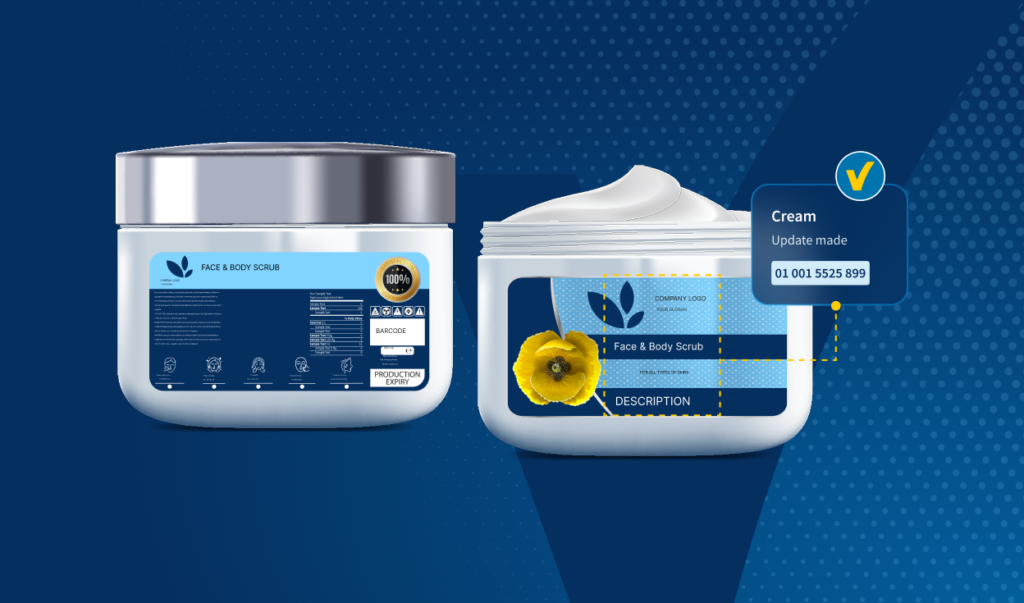

For regulatory, labeling, and packaging professionals who need to get it right, every time.
What is labeling compliance?
Labeling compliance means your product labels, packaging, leaflets, and documentation meet every applicable regulatory requirement — in every market where you sell.
That covers what’s on the label (the content: dosing instructions, warnings, indications, ingredients, symbols) and how it’s produced and controlled (the process: version control, review workflows, audit trails, approvals).
In regulated industries, such as pharma, medical devices, FMCG, crop science, labeling isn’t a marketing exercise. It’s a legal and safety obligation. Get it right, and you protect patients and consumers, meet regulatory expectations, and keep products moving. Get it wrong, and the consequences are serious: delayed launches, product recalls, regulatory action, and worse.
Labeling compliance applies across all your documentation: primary and secondary packaging, patient information leaflets, Instructions for Use (IFUs), Device Familiarity Units (DFUs), carton text, barcodes, promotional materials, and regulatory submissions.
Why labeling compliance matters
Consumer & Patient safety first
A label is often the last line of defence between a product and a patient. Incorrect dosing instructions, missing contraindications, or a wrong-language leaflet can directly harm the person using the product. That’s not a hypothetical risk. It’s the reason regulators scrutinize labeling so closely — and why the consequences of getting it wrong are so severe.
Regulatory action and product recalls
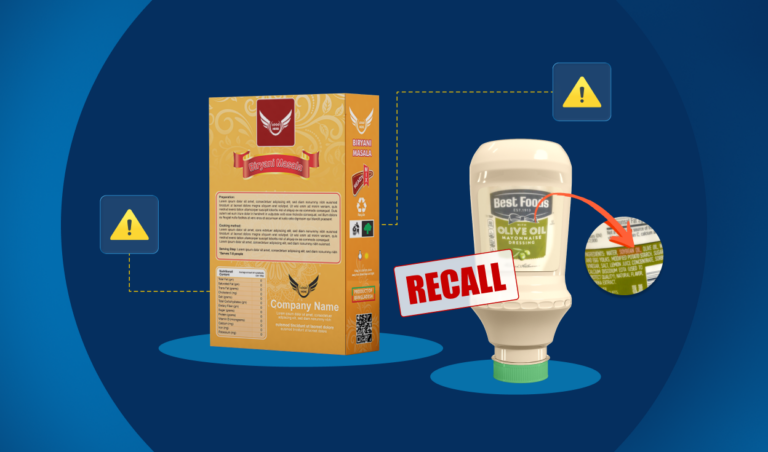
Labeling errors are among the most common reasons for product recalls in the pharmaceutical, medical device and FMCG sectors. A single deviation — a missing warning, an incorrect strength, missed ingredient a barcode that won’t scan — can trigger a market withdrawal, a Corrective and Preventive Action (CAPA), or a forced revision that delays distribution for months. The financial and reputational impact is significant. The personal accountability for those responsible is real too.
Submission approval and time-to-market
Regulatory agencies don’t approve products with labeling errors. Inaccurate or non-compliant labels slow approvals, force resubmissions, and delay launches. In markets where time-to-market is a competitive advantage, that’s costly. In markets where patients are waiting, or where your products are seasonal it’s worse.
Audit readiness and legal defensibility
Regulators audit. Inspectors ask questions. Legal challenges happen. When they do, you need to prove your labeling process was controlled, documented, and compliant — not just that the final label looked right. Without a clear audit trail, that’s very difficult to demonstrate.
Top 5 regulatory compliance risks RA leaders can’t ignore in 2026
Regulatory compliance failures rarely come from one big mistake. Discover the five hidden risks that can disrupt labeling, approvals, and global product launches.
Key regulations governing labeling compliance
Different industries and markets operate under different frameworks but the underlying principle is consistent: labeling must be accurate, controlled, and traceable.
Pharmaceutical
The FDA (U.S. Food and Drug Administration) sets labeling requirements under 21 CFR Part 201 for prescription and OTC drugs, and 21 CFR Part 314/601 for branded and biologic submissions. The EU operates under Directive 2001/83/EC and the associated annexes, which govern what must appear on packaging and leaflets across member states. ICH guidelines (particularly ICH Q10) set expectations for pharmaceutical quality systems, including document control and change management.
Medical Devices
EU MDR (Medical Device Regulation 2017/745) and IVDR (2017/746) introduced significantly tightened labeling requirements — including UDI (Unique Device Identification) labeling, expanded symbol requirements, and stricter language obligations across member states. In the U.S., FDA 21 CFR Part 801 governs medical device labeling. ISO 15223-1 defines the symbols used on device labels globally.
FMCG
Regulatory requirements vary by product category and market, but accuracy, allergen declarations, nutritional information, and origin labeling are strictly enforced. The EU Food Information to Consumers Regulation (FIC, Regulation 1169/2011) and FDA’s food labeling requirements under 21 CFR Part 101 apply in their respective markets.
State-level food labeling requirements are adding a new layer of complexity in the U.S. Texas Senate Bill 25 (SB 25), signed into law in June 2025 and effective January 2027, requires a visible warning label on any food product sold in Texas that contains one or more of 44 specified additives — including certain certified color additives such as Red 40 and Yellow 5, and titanium dioxide. The required warning reads: products contain an ingredient not recommended for human consumption by the appropriate authority in Australia, Canada, the EU, or the UK. Non-compliance carries civil penalties of up to $50,000 per product per day. The law is currently subject to ongoing litigation and a preliminary injunction, but manufacturers selling into Texas should be actively assessing their labeling and formulation strategy ahead of the 2027 enforcement date. Louisiana has enacted similar requirements, and the trend toward state-level ingredient disclosure mandates is expected to continue — creating a genuine multi-jurisdiction labeling challenge for national FMCG brands.
For cosmetics and personal care, the Modernization of Cosmetics Regulation Act (MoCRA) — the most significant expansion of FDA authority over cosmetics since 1938 — introduced mandatory facility registration, product and ingredient listing, adverse event reporting, and safety substantiation requirements. On labeling specifically, MoCRA requires cosmetic product labels to identify fragrance allergens (a proposed rule is expected from FDA in 2026) and include contact information for adverse event reporting. Non-compliant products are subject to mandatory recall authority. For teams managing cosmetic product labels across multiple SKUs and markets, MoCRA adds a documentation and version control burden that manual processes struggle to handle reliably.
Crop Science / Agrochemicals
Pesticide and agrochemical labeling is regulated nationally and regionally — in the U.S. by the EPA under FIFRA, in the EU under Regulation (EC) 1107/2009. These frameworks mandate specific language, safety statements, and usage instructions that vary significantly by market. Non-compliance carries significant penalties and can result in product bans.
But federal registration is only part of the picture. In the U.S., every state also operates its own pesticide registration process, and most require separate registration for end-use products in each state where they’ll be sold. State requirements vary significantly in terms of documentation, review timelines, fees, and application cutoff restrictions — and some states go further than federal standards. California is the most prominent example: the California Department of Pesticide Regulation (CDPR) operates independently of EPA and imposes stricter requirements, and California’s Proposition 65 (the Safe Drinking Water and Toxic Enforcement Act) requires businesses to place explicit cancer and reproductive harm warnings on products containing listed chemicals, including many agrochemical actives. Some states can also permit registration of pesticide uses not covered by the federal label under FIFRA’s Special Local Needs provisions (Section 18 emergency exemptions). The practical result is that crop science companies managing labels across the U.S. market often maintain state-specific label variants — each requiring its own controlled review, approval, and documentation trail.
Cross-cutting: GxP, validation, and ISO
Across all regulated industries, Good Manufacturing Practice (GMP), Good Documentation Practice (GDP), and Good Regulatory Practice (GRP) principles govern how processes are documented and controlled. Software tools used in regulated workflows — including labeling review systems — should be validated in line with GxP and specifically GAMP 5 guidelines and 21 CFR Part 11 (electronic records and signatures) if you want the highest standards.
"TVT is an essential tool for ensuring our pharma packaging and labelling is fully compliant with our marketing licences. We started with a few local licences and moved to a fully hosted server model when our global colleagues wanted to share in the benefits."
Nick Hill
Sr Director, Regulatory & Quality, EAME — AllerganHow labeling compliance works: process overview
Compliant labeling doesn’t happen at the end of the process. It’s built into every stage.
1. Content creation and authoring
Labeling text originates from approved sources: regulatory dossiers, clinical study data, safety databases, manufacturing data & ingredients lists and internal content libraries. Changes must be tracked from source to label. Any deviation from the approved text — even a single character — is a compliance risk.
2. Review and verification
Every version of a label must be systematically compared against its reference: the master text, approved artwork, or previous version. This is where most labeling errors occur — in the gap between what was approved and what ends up in the final file. Visual checks and manual comparison are inherently error-prone. Purpose-built verification software catches what the human eye misses: invisible Unicode characters, formatting differences, spacing changes, symbol swaps.
3. Approval workflows
Multiple stakeholders sign off on labels: Regulatory Affairs, Manufacuring, Medical, Legal, QA, sometimes Marketing. Structured workflows with role-based access and documented approval steps create the audit trail regulators expect.
4. Change control
When a label changes — new market, updated safety information, reformulation — every deviation from the approved version must be identified, assessed, and documented. Uncontrolled change is one of the most common sources of labeling non-compliance.
5. Artwork and print verification
The final step before a label goes to press. The printed or print-ready file must exactly match the approved master — text, graphics, barcodes, and all. Artwork verification catches layout shifts, image differences, and barcode readability issues that text comparison alone won’t find.
6. Archiving and audit readiness
Every decision, comparison, approval, and version must be stored and retrievable. If a regulator asks how a particular change was made, or an auditor requests the history of a label, you need to be able to answer clearly and quickly.
Common labeling compliance risks
These are the issues that trip teams up most often — and the ones that carry the biggest consequences.
Human error in manual comparison
Reading two documents side-by-side and marking differences by hand is slow, tiring, and unreliable. Reviewers miss things: a transposed digit in a concentration, a missing symbol, a spacing difference that changes reading order. Not because they’re careless — because the task exceeds what manual attention can reliably deliver.
Undetected text deviations
Standard comparison tools — Word Compare, Adobe Acrobat markup — catch obvious text changes, but miss Unicode-level differences: invisible characters, soft hyphens, non-breaking spaces, right-to-left text issues in multilingual documents. These are exactly the kinds of deviations that slip through to print.
Version control failures
When teams work across disconnected systems — email, shared drives, standalone PDF tools — it’s easy for the wrong version to enter a review cycle. A label based on superseded artwork or outdated text is a compliance failure waiting to happen.
Multilingual labeling errors
Global products require labels in many languages. Text expansion, right-to-left scripts, special characters, and locale-specific requirements all create opportunities for errors that a reviewer working in one language simply won’t catch in another.
Inadequate audit trails
If your review process isn’t documented — who compared what, when, and what they found — you can’t prove compliance. Regulatory agencies and auditors don’t accept “we checked it” as evidence. They expect records.
Late-stage discovery
Errors caught at artwork review are expensive. Errors caught after print are catastrophic. The further a labeling error travels through the production process, the more it costs to fix — in time, money, and risk.
AI-generated content without sufficient oversight
As AI tools enter regulatory workflows, they introduce new risks: hallucinated content, lack of traceability, and difficulty demonstrating the human review required by regulators. In 2026, regulatory agencies are paying close attention to how AI-assisted content is validated and audited.
How to ensure labeling compliance: workflow and automation
Build compliance into your process, not onto the end of it
The teams with the strongest compliance records aren’t the ones doing the most thorough final review. They’re the ones who’ve removed the conditions for error earlier in the process: clear version control, approved content libraries, and systematic verification at each stage.
Replace visual comparison with purpose-built verification
The core of a robust labeling compliance workflow is a verification step that doesn’t rely on the human eye alone. Purpose-built content verification software compares documents character-by-character and pixel-by-pixel — catching deviations in text, formatting, layout, artwork, and barcodes that visual checks miss.
Look for tools that:
- Support any file format combinations (Word, XLS, PDF, Adobe Illustrator, XML, and others)
- Handle multilingual content, including right-to-left scripts
- Detect Unicode-level text differences (not just visible character changes)
- Run pixel-level artwork comparison for graphics and packaging
- Verify barcode readability before print
- Generate complete, audit-ready comparison reports
- Integrate with your existing artwork management and regulatory systems
Document everything, automatically
Every comparison should produce a record: what was compared, what differences were found, how each was resolved, and who approved it. That documentation is your compliance evidence — and it should be created automatically as part of the review, not compiled manually afterward.
Build structured approval workflows
Role-based access, defined review stages, and documented sign-offs turn your labeling process from an informal sequence of steps into a controlled, auditable workflow. When a regulator asks who approved a change, you should be able to answer in seconds.
What to look for in a regulated document workflow solution
The strongest solutions for regulated document workflows do three things together, not separately: they route documents through structured, role-based approvals; they verify every version against its approved source at each stage — not just at the end; and they generate a complete, audit-ready record automatically. A tool that only handles approval routing, or only handles verification, leaves a gap that someone has to fill manually.
Look for a platform where verification is built into the workflow itself, not bolted on as a separate step. TVT Workflow connects review and approval directly to verification, and pairs with TVT Artwork for the final print-ready check — so nothing advances to the next approval stage until it’s been checked against the source.
Validate your tools
In regulated industries, the software you use for labeling review is part of your controlled process. It needs to be validated — with documented protocols, qualification evidence, and ongoing performance monitoring. When evaluating verification tools, ask for validation documentation upfront.
Plan for change
Labels change. Regulations evolve. Markets expand. Build your labeling compliance process so it handles change cleanly: systematic comparison of new versions against approved masters, documented deviation assessment, and clear sign-off before anything moves forward.
Regulatory compliance: your questions, answered
How can I ensure my content meets all regulatory standards?

Build verification into every stage of your process, not just the final check. Compare every version of your labeling, artwork, and documentation against its approved source — character-by-character and pixel-by-pixel — instead of relying on manual review alone. Document every comparison automatically, so you have audit-ready evidence the moment a regulator asks.
Can manual review alone keep content compliant?
Manual review catches the errors a reviewer is looking for — it misses the ones they’re not. Unicode-level differences, invisible characters, and subtle layout shifts routinely slip past even careful visual checks. Most regulated teams pair manual review with automated verification to close that gap.
What should compliance verification actually cover?
Text, artwork, and barcodes, across every file format and language you work in. A process that only checks text will still let an artwork or barcode deviation through to print — and any one of those failures can trigger a CAPA or a recall on its own.
How do I prove content was reviewed for compliance?
Every comparison needs a record: what was checked, what was found, how it was resolved, and who approved it. That’s the difference between telling a regulator “we checked it” and showing them exactly how you did.
TVT: the compliance backbone for regulated labeling teams
Regulatory teams working on high-stakes labeling don’t need another tool to manage. They need one that works, reliably, completely, every time.
TVT is the content verification platform built specifically for regulated industries. It catches what others miss: Unicode-level text deviations, pixel-level artwork differences, barcode readability failures — across any file format, any language, any layout. Every comparison generates a complete, audit-ready report. Every step is logged. Every deviation is documented.
That’s why TVT is trusted by all top 20 global pharma companies, five health authorities, and over 440 leading regulated companies worldwide, with a 98% customer satisfaction rate and hands-on support from a team that speaks your regulatory language.
Stop second-guessing your labels. See how TVT makes compliance a backbone, not a bottleneck.
Further reading
- Why pharmaceutical labeling is critical for compliance, safety & risk prevention
- Navigating medical device regulations: how to meet labeling artwork compliance standards
- Navigating agrochemical regulatory compliance: how to meet global crop protection requirements
- Med tech in a globalized world: overcoming regulatory compliance challenges for international success
- How automated proofreading supports FDA, EMA, and 21 CFR Part 11 compliance – Schlafender Hase
- How to reduce labeling errors and prevent recalls in regulated industries – Schlafender Hase
- What tools verify regulatory-compliant artwork and label content? – Schlafender Hase