Why pharmaceutical labeling is critical for compliance, safety & risk prevention


Table of contents

What is pharmaceutical labeling?
Pharmaceutical labeling refers to all written, printed, or graphical information associated with a medicinal product, including packaging, patient information leaflets (PIL), instructions for use (IFU), and regulatory submission documents.
This content must comply with strict global regulations such as FDA, EMA, and GxP requirements to ensure patient safety, accurate product usage, and regulatory approval across markets.
Regulatory guidelines for labeling in pharma
Get a clear overview of pharmaceutical labeling regulations, including FDA and EMA requirements, and how to ensure compliance across labeling, packaging, and artwork processes.
Read moreWhy is labeling important in the pharmaceutical industry?
Labeling is critical in the pharmaceutical industry because it ensures that patients, healthcare providers, and regulators receive accurate and consistent information about a drug’s dosage, usage, risks, and storage.
Even small labeling errors—such as incorrect strength, units, or wording—can lead to:
- Patient harm
- Regulatory violations
- Product recalls
- Significant financial and reputational damage
Why pharmaceutical labeling matters
Patient safety
- Incorrect dosage can create direct health risks
- Missing warnings can lead to adverse events
- Misinterpretation can result in incorrect product usage
Regulatory compliance
- Labeling must meet FDA, EMA, and GxP requirements
- Final packaging and artwork must match approved source content exactly
Consistency across formats
- Content moves across SmPC, PIL, IFU, packaging, and artwork
- Errors often occur during copy transfer, formatting, or version changes
Multilingual accuracy
- Global products require translations and local regulatory terminology
- Complexity increases across markets, languages, and layouts
Learn how to navigate FDA guidelines for pharmaceutical packaging and artwork—from regulatory requirements to real-world risks and how to ensure accuracy across every stage of the approval process.
What happens when labeling goes wrong?
Labeling errors can create serious operational, regulatory, and patient safety consequences.
- Product recalls caused by dosage or strength errors
- Regulatory findings during inspections
- Delays in product launches
- Legal liability and reputational damage
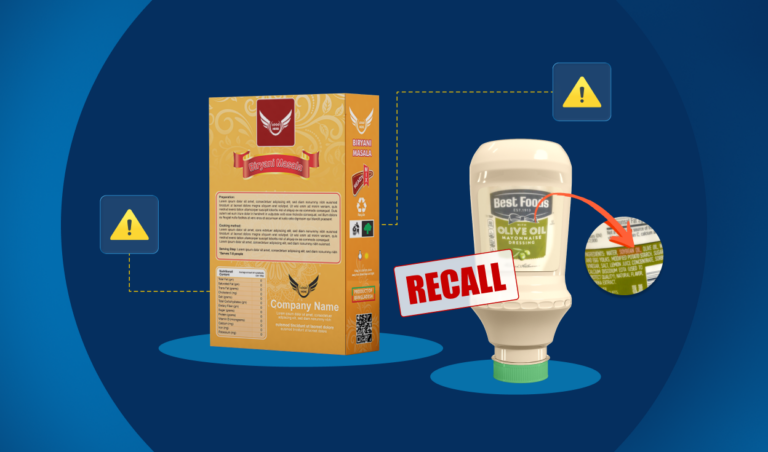
Real-world failures often come down to small but critical discrepancies – such as incorrect strengths, units, or wording.
Real-world example: keeping patients safe and preventing artwork errors
As Pharmanovia grew, its artwork team needed to review long and complex leaflets faster, without introducing deviations or increasing revision cycles.
“For us, the most important aspect is patient safety”
With increasing volumes of labeling updates and complex regulatory requirements, the team needed to improve efficiency while maintaining strict accuracy.
By implementing automated verification, they were able to:
- Review long leaflets more efficiently
- Reduce the number of revision cycles
- Improve consistency across labeling formats
- Strengthen quality control without slowing workflows
How pharmaceutical labeling works
Ensuring labeling accuracy requires a structured, end-to-end process that connects regulatory content, artwork, and verification.
- Source content creation
Regulatory teams define approved text such as SmPC, PIL, and IFU content. - Content adaptation
Text is adapted for packaging, leaflets, and different markets or languages. - Artwork design
Approved content is placed into packaging layouts and production formats. Learn more about the artwork review process. - Review and approval
Regulatory, QA, medical, and marketing teams review the content. - Verification and quality control
Approved source text is compared against final artwork and production files to ensure accuracy. Learn more about regulatory guidelines for labeling in pharma. - Approval and distribution
Final content is approved and released for production and market use.
Why companies are moving to automated verification
Pharmaceutical labeling involves multiple formats, stakeholders, systems, and languages. Manual review introduces avoidable risk, particularly when dealing with complex regulatory content.
Automated verification helps teams:
- Improve accuracy across all labeling materials
- Maintain consistency between source documents and artwork
- Support audit-ready compliance
- Reduce errors that could lead to recalls or regulatory findings
What are the main risks of labeling errors?

Labeling errors can lead to incorrect dosage instructions, missing safety warnings, inconsistencies across documents, product recalls, regulatory penalties, and patient harm.
How do pharmaceutical companies ensure labeling accuracy?
Companies use structured workflows, regulatory controls, and automated verification tools to compare approved source text against final artwork and packaging.
What regulations apply to pharmaceutical labeling?
Pharmaceutical labeling is governed by FDA requirements (U.S.), EMA guidelines (EU), and GxP standards, all of which require accuracy, traceability, and audit-ready documentation.
What is automated proofreading in pharma labeling?
Automated proofreading uses software to compare files such as Word, PDF, XML, and other formats to detect differences in text, numbers, formatting, and structure.
Does TVT integrate with regulatory, artwork, or document management systems?
Yes. TVT can be integrated into artwork management systems (AMS), document management systems (DMS), and regulatory platforms, both on-premise and in the cloud.
Improve labeling accuracy with structured workflows and reliable verification
Ensuring labeling accuracy requires more than manual review. It requires a process that supports compliance, consistency, and patient safety across every format and market.
Discover how FHIR-based ePI is reshaping pharmaceutical labeling and regulatory submissions. This playbook shows how to improve data consistency, reduce manual work, and prepare for the future of digital labeling.