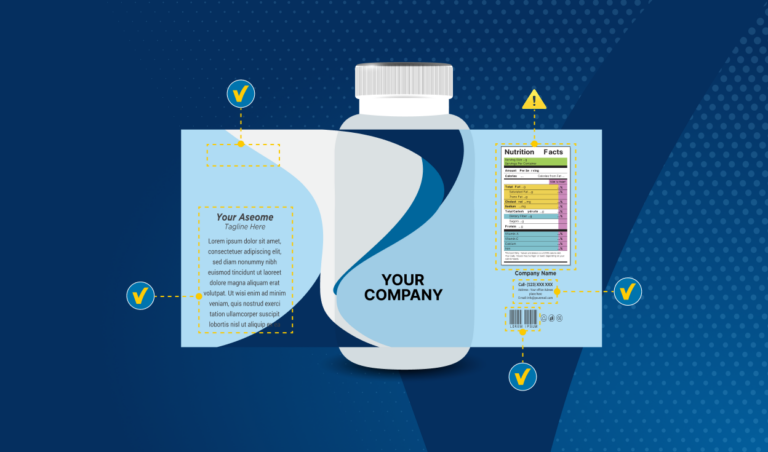
From review to approval: medical device labeling workflow
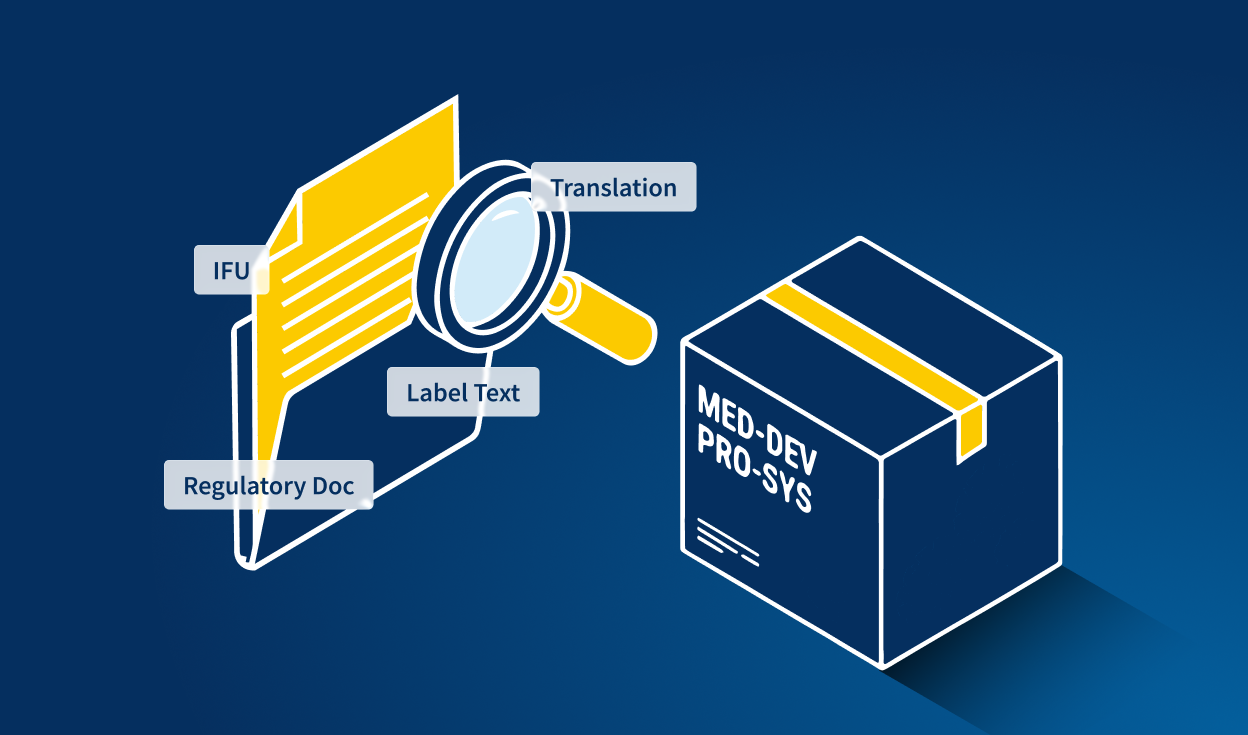


Table of contents
- Introduction
- What is a medical device labeling workflow?
- Step 1 — Clinical trials and submission phase
- Step 2 — Advertising and promotional materials development
- Step 3 — Artwork and e-Labeling development
- Step 4 — Pre-press and printing phase
- Where most med device labeling workflows break down
- How TVT fits into your med device labeling ecosystem


Medical device labeling is held to some of the strictest documentation standards in regulated industries. A single inconsistency in an IFU, a missed update in a DFU, or a barcode error on packaging can delay market access — or trigger a costly recall.
Unlike pharmaceutical labeling, medical device documentation adds unique complexity: Instructions for Use (IFUs) and Directions for Use (DFUs) run to dozens of pages with multi-page tables, technical diagrams, and safety symbols. Translated versions must preserve formatting precision as well as textual accuracy. And with MDR and IVDR tightening requirements across Europe, the margin for error has never been smaller.
This guide walks through the complete medical device labeling and documentation workflow — stage by stage — identifying where errors occur and how TVT helps teams eliminate them before they reach market.
What is a medical device labeling workflow? |
|---|
| A medical device labeling workflow is the end-to-end process by which device documentation — from regulatory submissions to printed packaging and digital labeling — is created, verified, approved, and maintained for compliance. It spans four core phases: |
| 1. Clinical trials and submission — Labels, IFUs, and DFUs prepared for health authority review |
| 2. Documentation and promotional materials — Detailed IFUs verified alongside advertising claims |
| 3. Artwork and e-labeling — Multilingual packaging, accessibility compliance, barcode verification |
| 4. Pre-press, publishing, and print — Supplier proofs verified before production |
The unique documentation challenge in medical devices
Medical device manufacturers face labeling complexity that goes well beyond packaging text. IFUs for surgical instruments, diagnostic equipment, or implantable devices may contain hundreds of pages of procedural instructions, complex tables, safety warnings, and embedded technical illustrations — all of which must be flawlessly reproduced across multiple language versions and format types.
Regulatory frameworks such as EU MDR (2017/745), IVDR (2017/746), and FDA 21 CFR Part 801 impose strict requirements on the accuracy and traceability of this documentation. A formatting change that alters the reading order of a safety instruction, or a table that shifts incorrectly in translation, is not just an aesthetic problem — it is a compliance failure.
Under EU MDR, manufacturers are required to maintain a technical file with up-to-date labeling documentation. Any post-market labeling change must be traceable and documented — making an auditable verification workflow not just best practice, but a regulatory requirement.
Step 1 — Clinical trials and submission phase
The documentation lifecycle begins during the clinical and regulatory submission phase. At this stage, manufacturers prepare labeling content — device labels, IFUs, DFUs, and clinical trial labeling — for submission to health authorities including the FDA, EMA, notified bodies, and national competent authorities.
Complex submission dossiers contain multiple interconnected documents that must remain internally consistent throughout the review process. Regulatory queries and revision cycles are common, and each revision carries the risk of introducing discrepancies between documents that were previously aligned.
Where errors happen in the submission phase
Common failure points
- Version mismatches across labels, IFUs, and DFUs in a dossier
- Missed updates to safety language across multiple documents
- Inconsistent formatting across QRD, BfArM, FHIR, SPL, SPM formats
- Manual cross-checking errors during rapid revision cycles
How TVT supports this phase
- Many-to-one comparison across labels, IFUs, and DFUs simultaneously
- Automatic recognition of QRD, BfArM, FHIR, SPL, and SPM formats
- Full audit trail exportable in XML, PDF, and HTML
- Change tracking across complex multi-document submission dossiers
Step 2 — Documentation and promotional materials development phase
Once a device moves toward approval or market launch, teams develop both detailed technical documentation and promotional content in parallel. IFUs and DFUs at this stage can be extensive — multi-page documents with complex table structures, procedural step sequences, contraindication lists, and technical diagrams — all of which must be verified for accuracy before they are handed off for translation or artwork.
Simultaneously, advertising and promotional materials must align their claims with the cleared or approved device indications. Any deviation between promotional claims and the device’s cleared labeling creates a regulatory exposure that can be difficult to detect through manual review alone.
This dual burden — verifying both the precision of technical documentation and the accuracy of promotional claims — makes this the most content-intensive phase of the medical device labeling workflow.
Where errors happen in documentation and promotional review
Common failure points
- Table formatting errors in multi-page IFUs and DFUs
- Punctuation and numbering changes altering procedural meaning
- Embedded image deviations (diagrams, symbols, pictograms)
- Promotional claims drifting from cleared device indications
- Font and number formatting inconsistencies across documents
How TVT supports this phase
- Table comparison with automated and enhanced modes for complex IFU tables
- Font style and number formatting checks across all document types
- Claim consistency checks for advertising materials vs approved labeling
- Detection of changes in embedded images, diagrams, and safety symbols
Step 3 — Artwork and e-labeling development phase
The artwork phase translates approved documentation into physical and digital labeling — device packaging, carton text, translated IFU booklets, eIFU files, and QR-linked digital labeling. For medical devices, this phase carries particular risks: IFUs are often translated into 30 or more languages, technical content must survive the translation and typesetting process intact, and barcode and QR code links must resolve correctly to the right eIFU version.
Accessibility is also a regulatory concern at this stage. The EU Accessibility Act and Section 508 in the US require that digital labeling be structured with a correct and verifiable reading order — something that can easily be disrupted during artwork layout without automated checking.
Where errors happen in artwork and e-labeling
Common failure points
- Translation inconsistencies across 30+ language versions
- Reading order disruptions in typeset IFU layouts
- QR code and linear 1D barcode URL errors
- Accessibility failures in eIFU digital structure
- Safety symbol and pictogram deviations in artwork files
How TVT supports this phase
- One-to-many comparison for all translated content versions
- Reading order verification for Section 508 and EU Accessibility Act compliance
- URL link verification for QR codes and linear 1D barcodes
- Single workflow covering spelling, text, barcodes, and reading order
Step 4 — Pre-press, publishing, and printing phase
The final stage hands approved artwork to packaging manufacturers and print suppliers for production. At this point, even small deviations — a pictogram rendered at the wrong size, a color scheme that deviates from brand or regulatory requirements, a logo that shifts position — can create compliance or brand integrity issues that require expensive reprinting or trigger a non-conformance.
For medical device manufacturers operating under quality management systems aligned to ISO 13485, the ability to document and demonstrate that supplier outputs were verified against approved artwork is not optional — it is part of the quality record.
Where errors happen in pre-press and print
Common failure points
- Logo size or position deviations from approved artwork
- Color scheme inconsistencies introduced by suppliers
- Pictogram errors or substitutions in printed packaging
- Missing documentation for QMS audit trail requirements
How TVT supports this phase
- Automated annotations to speed up printer proof reviews
- Comparison mode to automate checks on updated proof versions
- XML report data export for supplier performance analysis
- Audit trail documentation aligned to ISO 13485 QMS requirements
Where medical device labeling workflows break down
The failure modes in medical device labeling are structurally similar to pharma — but the documentation volume and regulatory stakes are often higher. IFU accuracy directly affects patient safety, and a labeling non-conformance can halt a product launch across entire regulatory regions.
- IFU complexity outpaces manual review — Multi-page tables, technical diagrams, and procedural sequences cannot be reliably reviewed by eye across dozens of language versions. Small formatting changes in table structure or step numbering can change clinical meaning.
- Disconnected documentation and artwork systems — Regulatory documentation is approved in one system; artwork is managed in another. Updates to approved IFU content rarely propagate automatically into the artwork workflow.
- Translation volume creates compounding risk — A single device with 30+ language versions multiplies every documentation error across every market. An error caught in one language version may exist undetected in 15 others.
- Regulatory audit exposure without a unified trail — MDR and ISO 13485 require demonstrable evidence that labeling has been verified. Without automated, documented verification at each stage, audit preparation becomes a significant resource burden.
Manual vs Automated Medical Device Labeling Workflow |
||
|---|---|---|
| Stage | Manual Workflow | Automated Workflow (TVT) |
| Submission | Manual cross-checking of labels, IFUs, and DFUs across multiple formats; high risk of inconsistencies | Automated many-to-one comparison with regulatory format recognition |
| IFU / DFU review | Page-by-page visual inspection of complex multi-page tables and embedded diagrams | Automated table comparison with enhanced modes for complex formatting and layouts |
| Artwork & translation | Individual review of 30+ language versions; reading order often checked manually or missed | One-to-many verification across all languages with reading order and barcode/URL checks |
| Print proofs | Visual supplier proof review; limited traceability and audit documentation | Automated proof comparison with XML export for QMS and supplier performance tracking |
The hidden complexity of global labeling: what medical device and IVD teams need to know
Medical device labeling workflows involve multiple document types, languages, and regulatory requirements—making consistency difficult to maintain with manual processes alone. From IFU reviews to final print proofs, every step introduces opportunities for errors.

"Purchasing TVT was a very wise business decision. It has cut down on the time it takes to proofread, allowing us to accomplish our goals more quickly and efficiently."
Erika Galiatsos
Corporation Manager, Labeling, Regulatory Affairs — InterchemHow TVT fits into your medical device labeling ecosystem
TVT operates as a verification layer across the tools and systems medical device manufacturers already use — adding automated checking and QMS-aligned audit documentation at each critical handoff without replacing existing workflows.
- Works alongside
Veeva Vault, Esko (built-in), artwork management systems, RIM platforms, QMS systems, and PLM and LIMS environments
- Regulatory alignment
Supports compliance with EU MDR, IVDR, FDA 21 CFR Part 11, ISO 13485, Section 508, and the EU Accessibility Act
- Supported formats
PDF, Word, Excel, HTML, XML, Adobe Illustrator, PPT — and cross-format comparison between any of these
- Key differentiators
Many-to-one and one-to-many modes, complex table comparison, multilingual support including non-Latin scripts, and XML audit exports for supplier tracking
1. What is a medical device labeling workflow?

A medical device labeling workflow is the structured process by which device documentation — including labels, Instructions for Use (IFUs), Directions for Use (DFUs), and packaging — is created, reviewed, translated, approved, and verified from regulatory submission through to printed or digital output. It spans regulatory affairs, quality assurance, artwork, and marketing functions, and must comply with frameworks including EU MDR, IVDR, FDA 21 CFR Part 801, and ISO 13485. The workflow covers four core phases: submission documentation, IFU and promotional review, artwork and e-labeling, and pre-press print verification.
2. What regulatory requirements govern medical device labeling?
Medical device labeling is governed by a combination of regional and international regulations. In Europe, EU MDR (2017/745) and IVDR (2017/746) set requirements for label content, IFU accuracy, and post-market labeling change documentation. In the US, FDA 21 CFR Part 801 regulates device labeling, and 21 CFR Part 11 governs electronic records and audit trails. ISO 13485 — the quality management standard for medical devices — requires that labeling verification activities be documented and traceable. Digital labeling accessibility is governed by Section 508 in the US and the EU Accessibility Act in Europe.
3. What causes errors in medical device IFUs and packaging?
Medical device labeling errors most commonly originate from the volume and complexity of documentation rather than single oversights. Multi-page IFUs with complex table structures are difficult to review manually across multiple language versions. Translation and typesetting processes can introduce formatting changes that alter procedural meaning — a step number shifting, a table row breaking incorrectly, or a safety symbol rendering at the wrong size. Disconnected systems between regulatory documentation and artwork management, combined with the absence of automated verification, mean that errors introduced at any stage can propagate undetected into final packaging.
4. How can automated verification help medical device manufacturers?
Automated verification tools like TVT address the core failure modes of medical device labeling by systematically comparing source documentation against translated artwork, print proofs, and digital labeling outputs. For IFU-heavy workflows, automated table comparison catches formatting and content changes that visual review routinely misses. One-to-many comparison enables a single verified source to be checked against all language versions simultaneously, rather than reviewed individually. Reading order verification ensures accessibility compliance across eIFU files. The result is faster review cycles, reduced revision rounds, and an audit trail that satisfies MDR and ISO 13485 documentation requirements.
5. What is an eIFU, and how does labeling verification apply to it?
An eIFU (electronic Instructions for Use) is a digital version of the IFU provided via a URL or QR code on device packaging, rather than as a printed insert. EU Regulation 207/2012 permits eIFUs for certain medical devices, and their use is increasingly common for devices where a printed multi-language IFU booklet would be impractical. Labeling verification for eIFUs includes ensuring that the URL or QR code on the packaging resolves correctly to the right eIFU version, that the digital document reflects the latest approved content, and that reading order and accessibility requirements are met. TVT supports URL link verification for both QR codes and linear 1D barcodes, and reading order verification for digital labeling structures.

FHIR-based ePI: A practical playbook for regulatory and labeling teams
A practical guide to FHIR-based ePI and how it’s reshaping pharmaceutical labeling and regulatory workflows.
Download the playbook