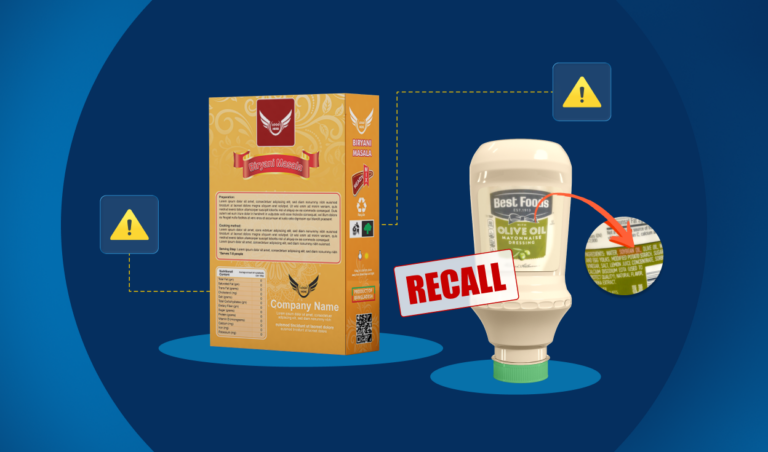
Beyond the warning label: a manufacturer’s guide to the 2026 U.S. labeling transition



Table of contents


The U.S. food labeling landscape is moving from a period of relative stability into one of high-velocity change. Texas SB 25 has grabbed the headlines. But the full picture is broader: Louisiana’s SB 14 digital disclosure requirements, the FDA’s overhaul of the “Healthy” claim, and a growing patchwork of state mandates are all landing at once.
For CPG and FMCG manufacturers and retailers, the central challenge is the same across all of them: maintaining a single, verified source of truth across a fragmented label, at a time when that label is changing faster than ever.
This post covers three of the biggest compliance flashpoints heading into 2027, and what your consumer packaging and regulatory teams need to know to stay ahead of them.
SB 25 and SB 14: two laws, two different verification problems
Texas SB 25 and Louisiana SB 14 are often discussed in the same breath, both are state-level additive disclosure laws, both are driving label changes. But from a verification standpoint, they create two very different problems.
SB 25: The version management risk
Most major brands are planning to reformulate before the 2027 deadline to avoid the mandatory Texas warning statement on products containing specified color additives. That’s the right call. But reformulation creates a packaging verification challenge that’s easy to overlook.
During the phase-out period, your team will be managing two versions of the same SKU simultaneously: the legacy version that still carries the SB 25 warning, and the reformulated version from which the warning must be removed. The risk isn’t just forgetting to add the warning, it’s accidentally carrying it over to a clean pack, or removing it before reformulation is complete.
TVT makes this manageable. By running a side-by-side comparison of the “Legacy” artwork against the “Reformulated” version, it highlights exactly what has changed and what hasn’t. That means the removal of the warning statement is confirmed without inadvertently affecting other mandatory text nearby: allergen disclosures, net weight declarations, ingredient lists.
SB 14: The invisible data problem
Louisiana’s SB 14 (effective early 2028) takes a different approach. Products containing certain additives must feature a QR code linking to a manufacturer-controlled landing page with disclosure information.
For packaging teams, this introduces a verification layer that doesn’t exist on the physical label: the data embedded inside the code. A QR code that looks correct to the human eye can still contain the wrong URL, fail GS1 compliance checks, or be unreadable at retail scan angles.
TVT Barcode allows reviewers to scan, decode, and grade QR codes directly within the mechanical artwork file. It extracts the embedded URL so the reviewer can confirm, before the job goes to print, that the link in the artwork matches the approved regulatory source link.
Key takeaway
- SB 25 creates a dual-version management challenge: confirming what was removed, not just what was added.
- SB 14 creates an invisible data layer: the QR code must encode the right URL and meet GS1 standards.
- Both require objective, character-level verification, not a visual check.
The “may contain” conundrum: when precautionary labeling becomes a liability
“May contain” statements are one of the most legally sensitive phrases in food labeling. They’re precautionary, not mandatory but the decision about when to use them, and exactly how to word them, carries real regulatory and liability weight.
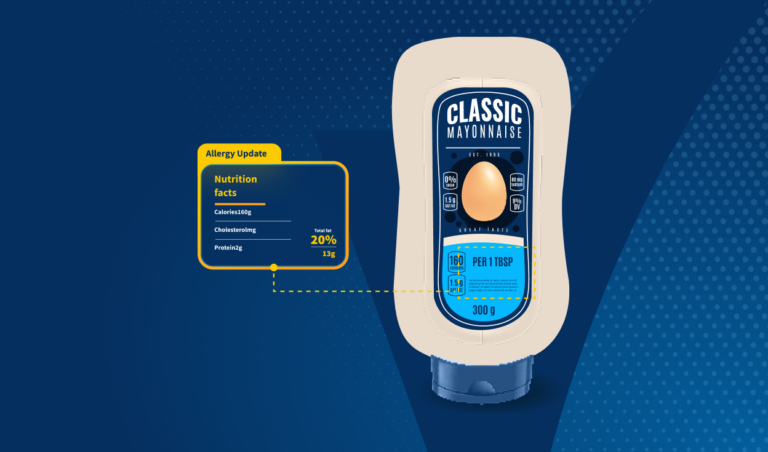
The challenge heading into 2027 is that allergen labeling is in motion. The FDA’s framework for voluntary precautionary allergen labeling (PAL) statements is evolving. Sesame became the ninth major allergen in January 2023 under FALCPA. And as reformulation accelerates in response to SB 25 and similar laws, new ingredient substitutions are introducing new cross-contact risk scenarios that weren’t on last year’s label.
Where the errors happen
In practice, “may contain” errors tend to fall into three categories:
Inconsistency across versions: A reformulated SKU removes a flagged additive but doesn’t update the allergen statement to reflect new manufacturing line arrangements.
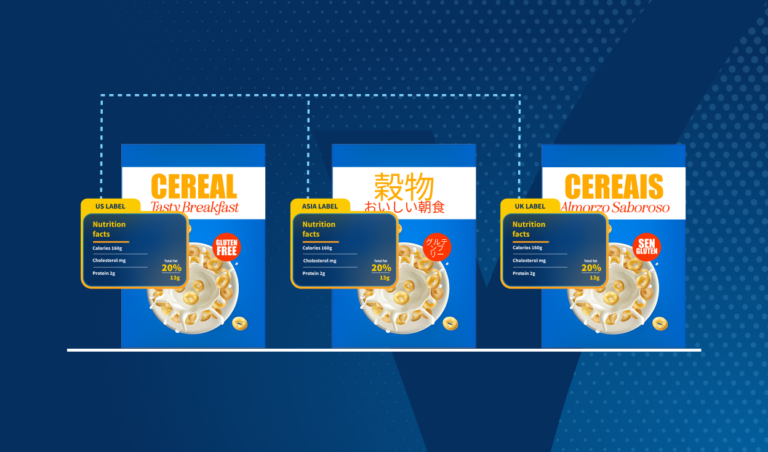
Copy drift between markets: A product sold in multiple states carries slightly different precautionary wording across regional pack variants, “may contain” vs. “produced in a facility that also processes”, creating a compliance gap.
FOP/BOP mismatch: A front-of-pack claim (e.g., “nut-free”) contradicts a back-of-pack “may contain tree nuts” statement that wasn’t caught before print.
These aren’t hypotheticals, they’re the kinds of deviations that surface in recall investigations and FDA warning letters. And they’re almost always the result of a manual review process that compared the new version against memory, not against a verified source document.
TVT’s character-by-character comparison catches copy drift between pack variants, confirms that FOP claims are consistent with BOP declarations, and creates a logged audit trail for every change. When a “may contain” statement is updated, the record shows who approved it, what it replaced, and when.
If there’s an error, TVT will catch it
No more wondering if you’ve missed any deviations and style inconsistencies across text and images

The “healthy” seal: managing a moving target
The FDA has been working to update its definition of the “Healthy” nutrient content claim for years. The proposed rule introduces strict new thresholds for added sugars, sodium, and saturated fats and it changes which food groups qualify at all. Products that legitimately carry a “Healthy” claim today may not qualify under the revised standard.
For packaging teams, this creates a cross-document verification problem that’s different from a standard label update.
The FOP/BOP accuracy gap
A “Healthy” seal on the front of pack is a claim. The Nutrition Facts table on the back is the evidence. As sodium values shift with reformulation, or as updated nutrient thresholds reset the eligibility bar, the FOP claim and BOP data need to stay in sync, across every SKU, every variant, every language version.
The risk isn’t just regulatory. A “Healthy” seal on a product that no longer meets the definition is a false claim, and a fast path to enforcement action, class action exposure, or retailer delisting.
TVT bridges this gap by comparing content across formats, from a nutritional data spreadsheet or XML master file against the final print-ready PDF artwork. It flags any discrepancy between what the data says and what the label shows, so the reviewer can make an informed compliance call before the job leaves the building.
Practical application
- Cross-reference your Nutrition Facts master data against final artwork before print release.
- Set up a project comparison template for FOP claims vs. BOP declarations.
- Build a verification step into every reformulation workflow, not just when the recipe changes, but whenever a nutritional threshold is updated.
FDA’s new front-of-package nutrition labeling
For a deeper look at upcoming U.S. labeling changes, including the FDA’s proposed front-of-package “Nutrition Info” box and what it means for manufacturers, read our full breakdown here.
The digital label is now part of the compliance picture
SB 14’s QR code requirement is an early signal of something broader: the label is no longer just the physical pack. SmartLabel initiatives, digital shelf tags, and regulatory disclosure landing pages are all extending the compliance surface area off-pack.
The risk that comes with this is what some teams are calling the “digital disconnect”, where the nutritional or ingredient data on the physical pack diverges from what’s published on the product’s landing page. That’s a compliance gap that visual proofreading can’t catch.
TVT’s ability to compare HTML files and structured data against master source documents means the same verification standard that applies to the printed label can extend to what’s published online. One source of truth, verified across every channel it appears in.
The labels are changing. The standard doesn’t have to.
SB 25 reformulations, SB 14 QR mandates, “Healthy” claim overhauls, “may contain” complexity, each of these is a different problem on the surface. But they all come down to the same underlying need: the ability to verify, with confidence, that what’s on the label is correct, complete, and consistent with every version that came before it.
Manual proofreading was never designed for this level of change velocity. TVT was.
Catch every deviation — on every version, every format, every time.