Why FMCG/CPG brands end up repackaging — and wow to avoid it


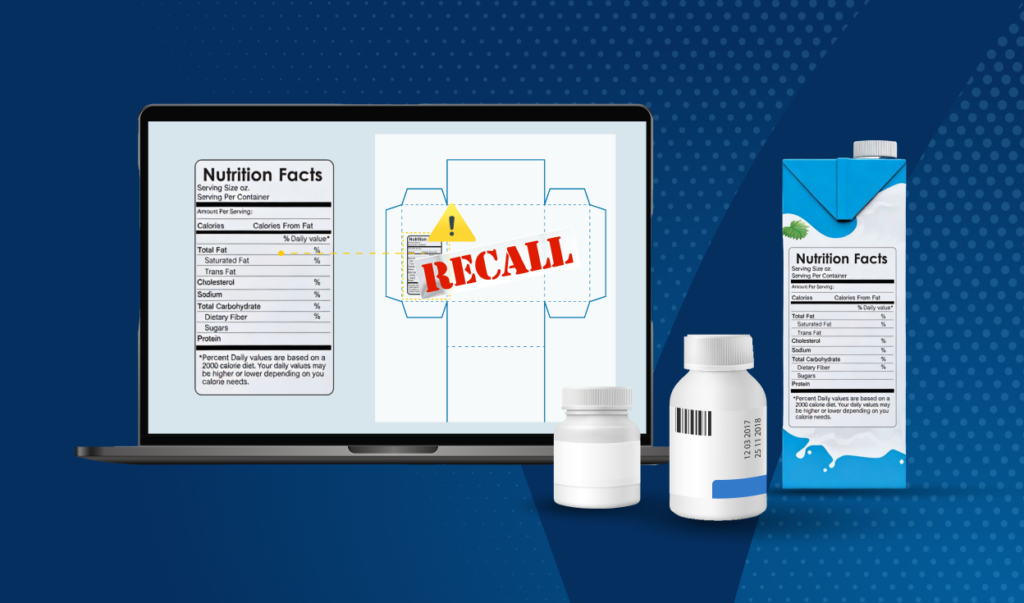

Repackaging gets a lot of positive attention in the consumer goods world. Whether it’s product innovation, launching entirely new concepts — or renovation — refreshing existing packaging for a new market or seasonal limited edition, done intentionally, it’s a smart brand move.
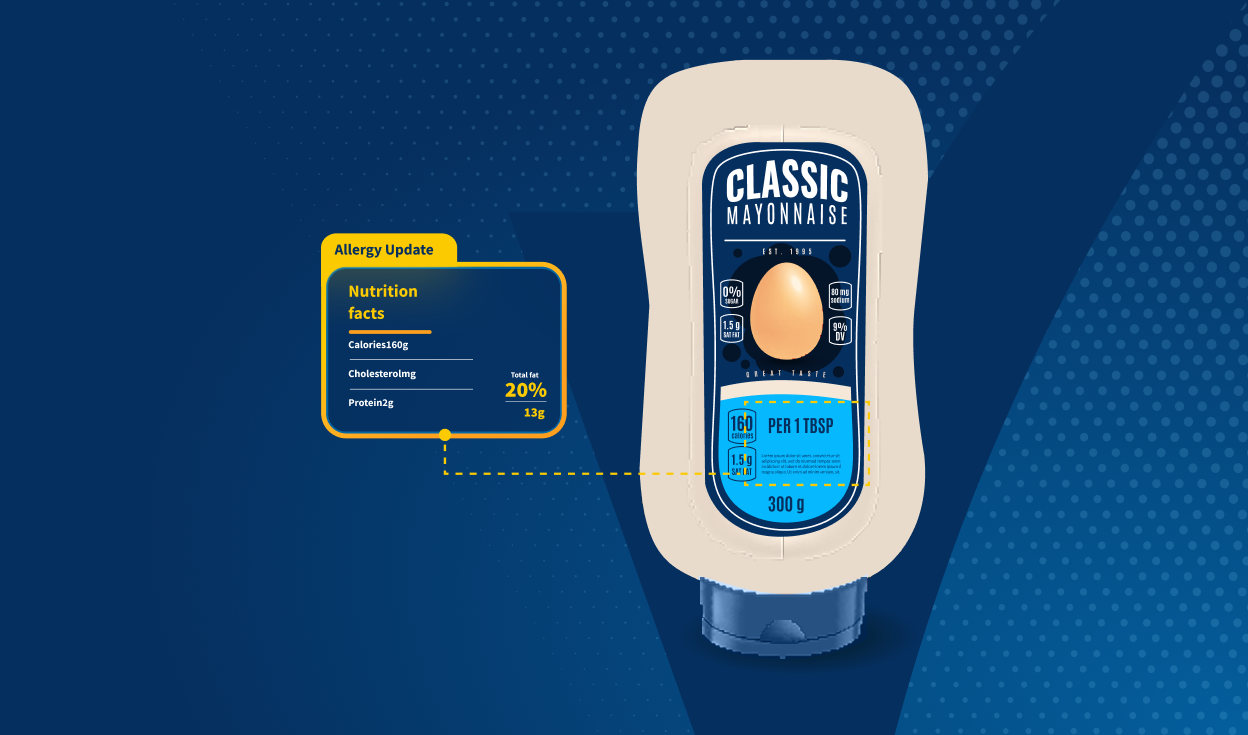
But there’s a less glamorous version that CPG/FMCG teams know all too well: the unplanned kind. The repackaging that follows a recall due to a missed allergen declaration, a barcode that fails at the scanner, or a claim that didn’t comply with a country’s label marketing rules. That kind of repackaging doesn’t build brand equity. It drains it.
The difference between the two? One is a decision. The other is a consequence.
What causes unplanned repackaging in FMCG/CPG?
Most unplanned repackaging resulting from a label error can be traced back to errors introduced or missed during the packaging artwork review process. Not because teams aren’t diligent, but because the process itself creates the conditions for things to slip through.
According to Schlafender Hase’s 2025 FMCG & CPG Packaging Accuracy & Compliance Report, which surveyed 100 FMCG/CPG professionals across North America and Europe, the most common process challenges are:
- 48% say regulatory checks happen too late in the artwork cycle
- 44% point to multiple hand-offs and offline systems
- 41% flag files scattered across platforms
- 38% cite manual error checking and approvals as a top pain point
Each of these is a point where a deviation, a wrong ingredient name, an updated claim that didn’t carry through, a font size that no longer meets regulatory requirements, can survive undetected all the way to print.
What does a packaging error actually cost?
When an error makes it through, the business consequences are significant. From the same report:
- 69% of respondents experienced reprint costs following an artwork error
- 57% faced repacking costs
- 43% reported launch delays and reputational damage
- 32% wrote off affected stock entirely
And that’s before factoring in the internal cost: the revision cycles, the cross-team back-and-forth, the missed launch windows. One error, caught late, can mean missing a retailer’s delivery window — and retailer SLAs don’t flex. Miss the agreed ship date and your product loses its shelf slot, potentially for an entire inventory cycle. That’s six weeks or more of lost sales and a competitor taking your space.


Vineed Ravindranath
Regional Sales Director
"By the time an error reaches print, you're not just fixing a file. You're dealing with reprints, repack costs, delayed launches, and a team that has to go back and figure out where it went wrong. Catching it a week earlier changes everything."
Learn MoreWhy manual review isn’t catching everything
The four key consequences of packaging label errors:
- Product Recalls: Inaccuracies in packaging labels can lead to product recalls, which are expensive and damaging to brand reputation.
- Legal Action: Misleading labels, particularly around “natural” and “sustainable” claims, can result in class-action lawsuits.
- Retailer Pushback: Major retailers have their own compliance standards. If a product’s label compliance isn’t up to par, they won’t stock it.
- Consumer Trust: Errors in ingredient lists or unsubstantiated health claims can lead to consumer distrust and long-term brand damage.
Most FMCG/CPG teams rely heavily on human review to catch errors before print. And experienced reviewers catch a lot. But they don’t catch everything, and that’s not a people problem. It’s a process one.
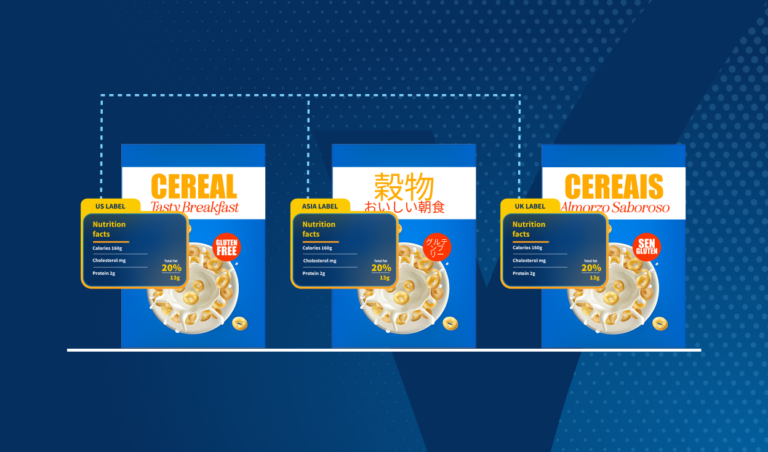
Manual side-by-side comparison is inconsistent by nature. It’s hard to spot a missing space, a subtle font weight change, or a barcode that will scan in-tool but fail in a real scan environment. In North America, 61% of FMCG/CPG teams still rely primarily on manual checking, according to our 2025 research. Even in Europe, where automated tools are more widely adopted, errors still make it through.
The issue isn’t effort. It’s that human review, at scale, across multiple file versions and languages, leaves room for things to go unseen.
How to prevent packaging errors and avoid reprints
The most effective place to stop an unplanned repackaging is before the artwork is approved and locked — not after it comes back from the printer.
Verify text and artwork together, in a single pass. FMCG/CPG packaging workflows touch many systems — PLMs, DAMs, AMS platforms, and agency handoffs — each adding potential for version drift. Switching between tools to check copy, then images, then barcodes adds handoff risk at every step. A standalone verification tool that checks across all file types in one workflow — regardless of which system produced them — reduces the chance of a change being missed in the gaps between platforms.
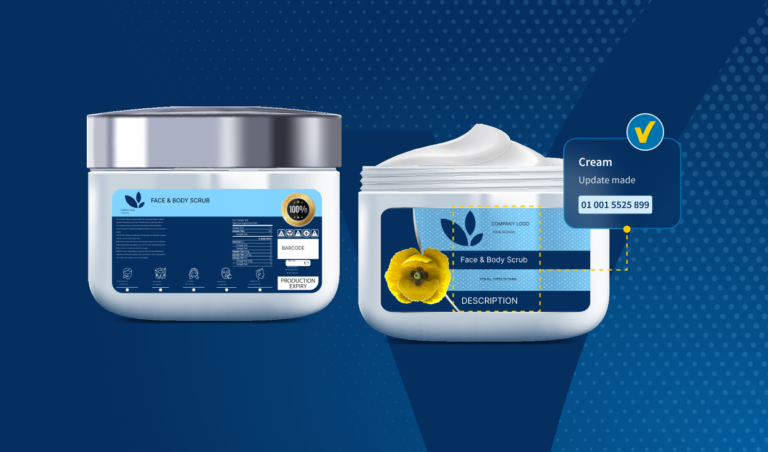
Automate the checks that are easiest to miss. Allergen formatting, barcode readability, ingredient list accuracy, font size compliance. These are the kinds of details that look fine on a quick visual scan but fail under closer inspection. Unlike rule-based checkers that flag predefined patterns, content-based verification compares the actual artwork against the approved source — catching deviations in text, imagery, and barcodes that rules alone would miss.
Compare against the approved source, not the previous version. A common source of error is teams comparing one artwork iteration to the last, rather than back to the approved copy. Deviations compound across rounds. Make sure files are clearly version-labelled and that your verification workflow always pulls from the locked, approved spec — not the most recent working file. Checking against the original approved document is the only way to be sure nothing has drifted.
Bring compliance checks earlier in the process. Nearly half (48%) of FMCG/CPG professionals in our survey said regulatory checks happen too late. When verification only happens at the end of the artwork cycle, there’s no room to fix things without delaying the launch.
"Nearly half of FMCG/CPG teams say compliance checks happen too late in the artwork cycle. That's not surprising — it's how most workflows are built. But late checks mean late fixes, and late fixes cost more in terms of time to shelf and productivity. The verification steps provides earlier accuracy and reduces review cycles in the workflow."
Dagmar Moreside
Strategic Business Development Manager, Schlafender HaseCatching it before print is the only recall you can afford
The good news is that most of those errors are detectable. as part of your artwork workflow and before going to print.
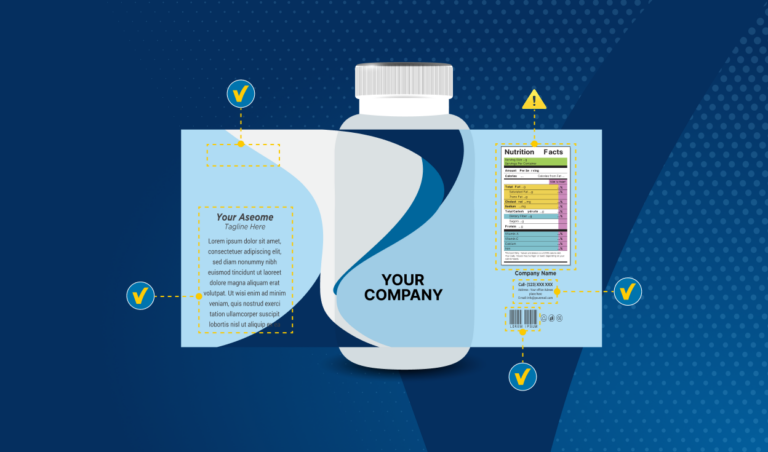
TVT compares text, images, and barcodes across any file format in a single workflow, flagging deviations that manual review misses, including hidden characters, formatting shifts, and multilingual content discrepancies. For FMCG/CPG teams specifically, it’s built to handle the unique complexity of packaging artwork — which spans conceptualization, digital creation, proofing, and final print-ready production, and involves multiple structured content elements that must all be accurate: multi-language files, printer’s proofs, allergen tables, INCI ingredient lists, and barcode verification, all in one place.
You can find out more about how FMCG/CPG teams use TVT to get to first-time-right, or book a personalized demo using your own files.
Source: Schlafender Hase FMCG & CPG Packaging Accuracy & Compliance Report 2025. Research conducted by GLG, September–October 2025. N=100 FMCG/CPG professionals across North America and Europe.
Further Reading:
Labeling compliance in regulated industries: the complete guide – Schlafender Hase
How FMCG and CPG companies can improve regulatory risk management for packaging – Schlafender Hase
Ensure compliance with the latest cosmetic trends and regulations – Schlafender Hase
The ripple effect: understanding the full impact of FDA’s new nutrition labeling – Schlafender Hase
The next wave of CPG and labeling in consumer packaging – Schlafender Hase