Preparing for FHIR-based ePI
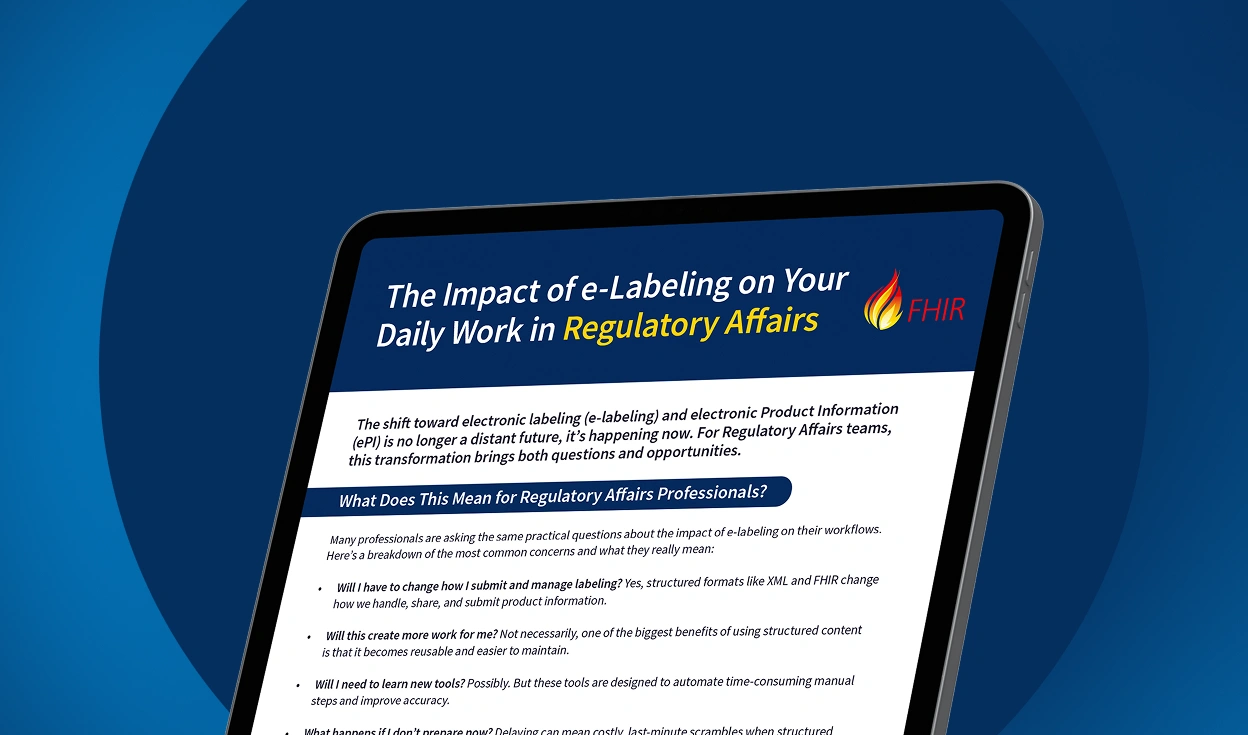



PI is going digital. And the details have never mattered more
Electronic Product Information (ePI) is moving toward structured, interoperable formats built on the FHIR standard. For Life Sciences companies, that changes more than how information is delivered, it changes how content is created, reviewed, and proven accurate.
FHIR-based ePI introduces new dependencies between data, structure, and meaning. A single misplaced element or inconsistency in XML can have regulatory consequences, even if the content looks “right” at first glance.
This practical guide walks through what that shift really means for regulatory, labeling, and content teams and how to adapt your proofreading and verification processes without adding manual work or risk. You’ll learn how to stay in control of accuracy as ePI moves from documents to structured data.
Why FHIR-Based ePI Changes Content Verification
Traditional labeling workflows focus on reviewing documents such as PDFs, Word files, and artwork proofs. FHIR-based ePI introduces a different challenge: content is now stored as structured XML.
In structured content environments, accuracy is no longer limited to the visible text. Teams must also ensure that the underlying structure, tags, metadata, and relationships between content elements remain correct.
A single error in XML structure can impact how information is displayed, exchanged, or interpreted by downstream systems. As regulatory authorities move toward structured electronic product information, verification processes must evolve alongside the content itself.
This is why many Regulatory Affairs and labeling teams are evaluating how their current proofreading processes will work in a structured content environment.
Common Challenges with FHIR XML
Organizations preparing for ePI initiatives often encounter the same challenges:
Managing Structured Content
FHIR-based ePI introduces XML elements, attributes, and hierarchies that do not exist in traditional document-based workflows.
Maintaining Version Control
Content may be reused across multiple outputs, increasing the importance of a single source of truth.
Cross-Functional Collaboration
Regulatory, labeling, quality, IT, and content management teams must work more closely together than in traditional labeling processes.
Ensuring Compliance
Teams need confidence that approved content remains accurate as it moves through structured content workflows.
Scaling Globally
Structured content must support multilingual requirements, regional variations, and evolving regulatory expectations.
Inside the ebook, you’ll learn:
- What FHIR-based ePI changes for regulatory and labeling teams
- Why manual proofreading isn’t efficient when managing structured, XML-based content
- How to verify accuracy in FHIR XML without relying on time-consuming workarounds
- Where automation strengthens ePI workflows and where human oversight still matters
- Real-world examples from companies already making the transition
What is FHIR-based ePI?

FHIR-based ePI is electronic Product Information structured using the HL7 FHIR standard, allowing content to be shared, reused, and consumed by digital healthcare systems.
Why is XML important for ePI?
XML provides the structured framework that allows product information to be machine-readable, searchable, and interoperable across systems.
Can manual proofreading support FHIR XML?
Manual review remains important, but structured content environments often require automated verification to efficiently identify inconsistencies and deviations.
What is the biggest challenge when moving to ePI?
Many organizations cite system integration, content governance, and workflow adaptation as the primary challenges when preparing for structured labeling initiatives.
How can Regulatory Affairs teams prepare?
Teams should familiarize themselves with structured content concepts, engage key stakeholders early, assess current workflows, and evaluate tools that support XML-based verification.
Learning the new language of the EMA & the FDA: FHIR
Fast Healthcare Interoperability Resources (FHIR) represents a significant step in how we manage and exchange information and is rapidly gaining acceptance.
Join industry experts Mike Baird and Gary Saner as they provide an introduction to the FHIR initiative, explore some current applications as well as the impacts, benefits and prospective timelines.