TVT vs generic proofreading tools: what regulated teams must know


Table of contents


Basic proofreading tools are built for writers. Regulated industries need something different — a verification layer that catches every deviation across complex formats, languages, and workflows without creating new risks.
What are "generic proofreading tools"?
Generic proofreading tools include familiar options like Microsoft Word’s Track Changes and Compare features, Adobe Acrobat’s comparison functionality, and open-source diff tools originally built for software code review.
These tools were designed to help individuals catch typos and track edits in straightforward documents. They work well within those boundaries. The problem arises when regulated teams apply them to packaging, labeling, and regulatory submissions; tasks with fundamentally different requirements.
Key distinction: Generic tools compare documents. Specialized verification tools confirm that documents are exactly right, across formats, versions, languages, and complex artwork.
What regulated teams actually need
Teams in pharma, medical device, CPG, and crop science face a different set of demands than standard document editors. A missed formatting change or an unverified barcode isn’t a style issue — it’s a regulatory risk. Effective content verification for these teams must:
- Detect errors across both text and embedded images
- Support comparison across multiple file formats (Word, PDF, XML, Illustrator, HTML, and more)
- Generate a compliant audit trail for regulatory submissions
- Handle high document volumes without slowing teams down
- Work reliably across multiple languages, including those the reviewer doesn’t speak
Integrate into existing artwork management, RIM, DMS, or PLM systems
What is automated proofreading in regulated industries?
Understanding the difference between manual and automated approaches is critical in regulated environments. Learn what automated proofreading is and how it helps ensure compliance, accuracy, and error-free labeling across complex workflows.
Where generic tools break down in real workflows
Artwork versus source comparison
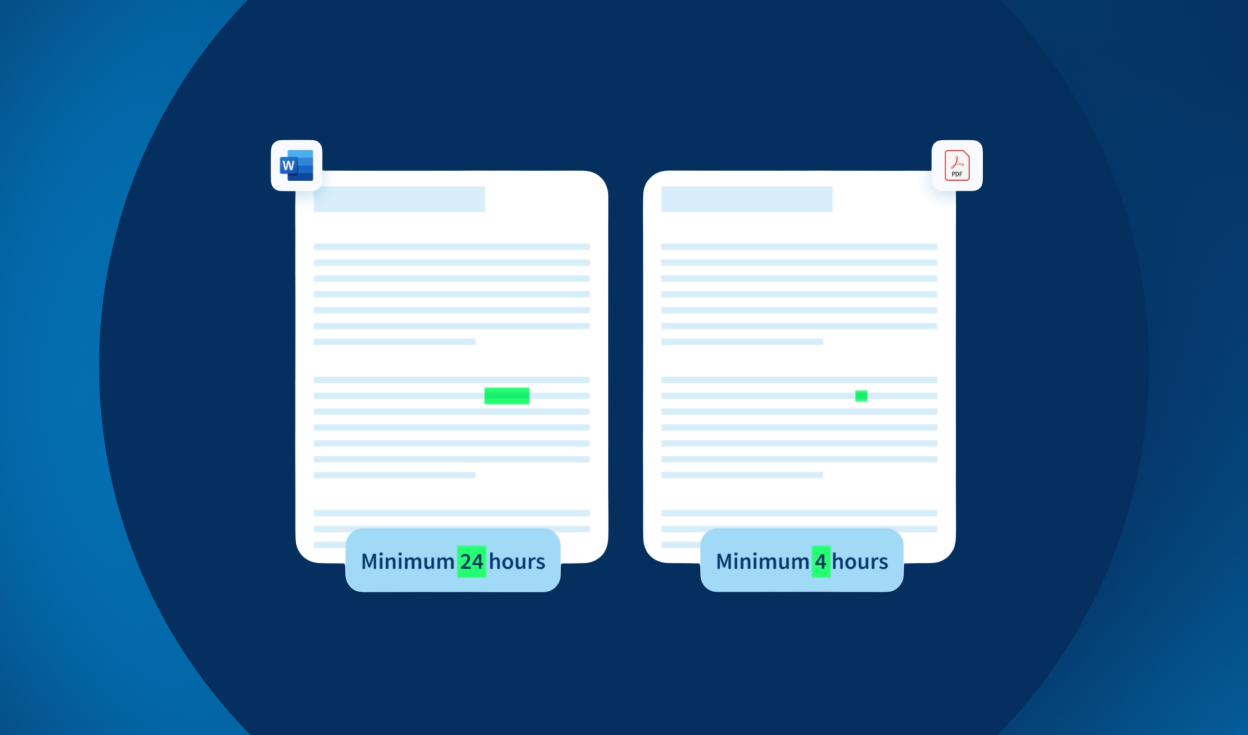
Packaging artwork passes through many hands — brand teams, agencies, translators, printers. Each handoff is a potential error point. Generic tools can’t compare a Word brief against a final Illustrator print proof, let alone detect whether a reading order has shifted or a pictogram has changed.
Multilingual content
Regulatory submissions and global packaging often involve dozens of languages. Generic tools have no mechanism to verify translations in languages the reviewer doesn’t know. TVT handles any language and flags deviations regardless of the reviewer’s linguistic background.
Complex formatting requirements
For packaging and labeling, formatting isn’t cosmetic — it’s regulatory. Bold warnings, superscript dosing instructions, and specific font sizes carry legal weight. Generic tools either miss these changes entirely or flood reviewers with false positives that obscure real errors.
Multi-handoff workflows
When content passes through country-specific locations, external contractors, and multiple review stages, manual checks become unreliable. Without system integration and automated audit trails, errors compound across handoffs.
When generic tools are enough
Not every team needs specialized verification. Generic tools are a reasonable fit when:
- Documents are simple and share the same format (Word to Word, PDF to PDF)
- Volumes are low and manageable with manual review
- There is no requirement for a formal audit trail
- Formatting precision is not a compliance concern
- Work doesn’t involve complex artwork, barcodes, or multilingual content
Honest baseline: If your team handles occasional document comparisons with simple layouts and no regulatory obligation, Word or Adobe features may be entirely sufficient.
When you need a specialized solution
Generic tools fit if you…
- Compare only same-format files
- Work with simple document layouts
- Have a low, stable document volume
- Don’t require an audit trail
- Have one verification checkpoint
TVT fits if you…
- Compare files across formats and languages
- Review complex tables, artwork, and barcodes
- Face a growing review workload
- Need compliance-ready audit trails
Have multiple handoff points in your workflow
A note on AI-powered verification
AI tools are increasingly present in document workflows, and they can support parts of the review process. However, regulated industries require verification results that are consistently replicated, every project, every time. Current AI tools don’t yet deliver that reliability for compliance-critical content without human oversight.
The practical standard for now is a combination: deterministic verification software that catches every deviation, with humans making the final call on each flagged item. That keeps both accuracy and traceability where regulators expect them.
The bottom line
Generic proofreading tools solve a real but narrow problem, catching text changes in simple documents. Regulated teams working with packaging, labeling, and submissions operate in a different category entirely. The risks are higher, the formats more complex, and the documentation requirements more demanding. That’s not a problem a spell-checker was built to solve.
Braille and foreign-language packaging
Braille and foreign-language packaging: what actually changes for pharma proofreaders as the EU goes digital.