Braille and foreign-language packaging: what actually changes for pharma proofreaders as the EU goes digital
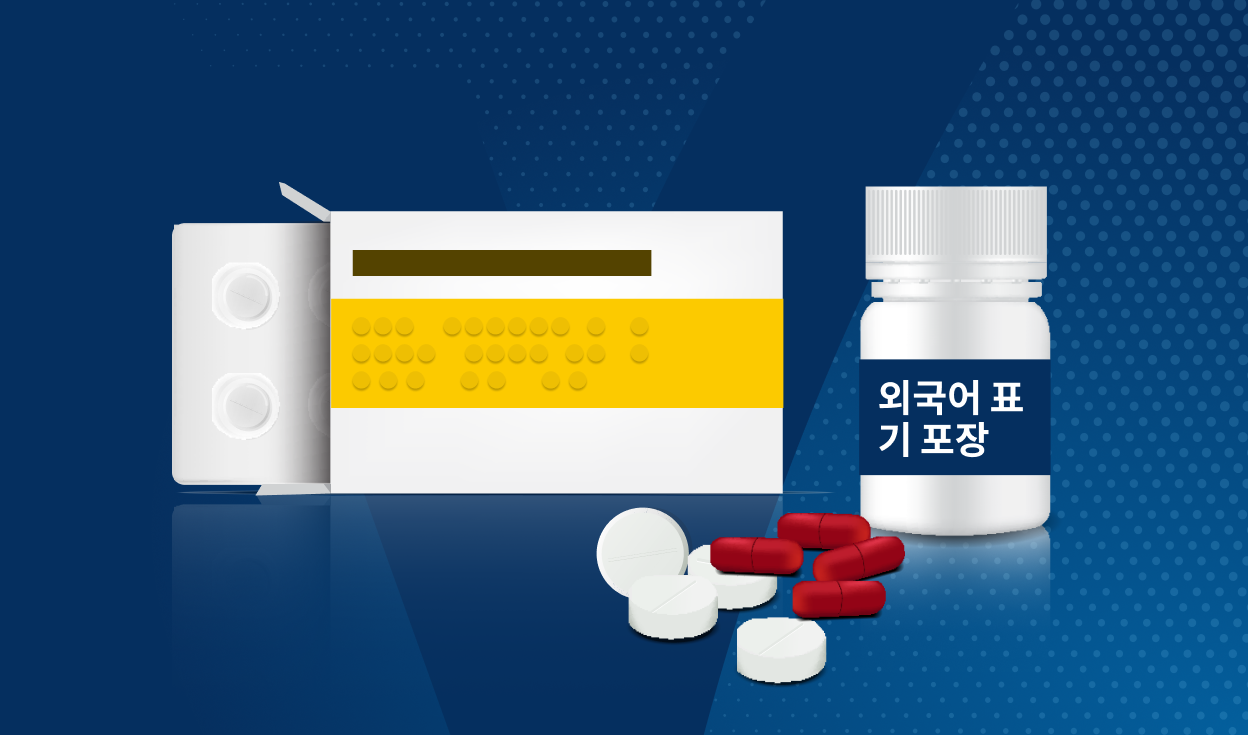



Braille and translated text are still mandatory on medicinal packaging across the EU, and nothing in the region’s shift toward electronic product information (ePI) changes that. Regulators are digitizing the leaflet, not the carton. Outer packaging still needs the product name in Braille, checked against the technical spacing standard ISO 17351, alongside every official language the product ships in. For proofreaders, that’s one more format to verify on top of a growing list of languages, artwork versions, and digital touchpoints — and manual review can’t keep pace. Automated verification software like TVT compares Braille, translated copy, and every other packaging element character by character in seconds, flags every deviation, and builds the audit trail regulators expect.
Why braille still belongs on your checklist
If you’re proofreading medicinal packaging for the EU, Braille isn’t a nice-to-have on your checklist. Since October 2005, EU law has required the product name to appear in Braille on the outer packaging of medicinal products sold across the bloc, with narrow exceptions for very small packs and low-output products. The European Blind Union puts the number of blind and partially sighted people in Europe at around 30 million — for many of them, Braille on the carton is the only independent way to identify a medicine.
The technical bar for getting it right sits in ISO 17351:2013, which defines dot height, dot spacing, and durability requirements for pharmaceutical Braille, built around the Marburg Medium spacing convention. That standard — not a company’s internal style guide — is what a proofreader is ultimately checking against.
The new wrinkle: going digital doesn’t retire braille
In March 2026, the Council and Parliament published compromise texts replacing Directive 2001/83/EC and the EMA Regulation — the biggest overhaul of EU pharmaceutical law in two decades — with formal adoption expected soon and application following from 2028. Separately, the electronic product information (ePI) framework, building on 2020 EMA/HMA/EC Key Principles and a proposed amendment to Article 58, lets Member States offer the package leaflet electronically, on paper, or both, once the EU ePI Common Standard is operational.
It’s tempting to read “digital leaflet” as “less paperwork.” It isn’t. Nothing in the published reform package removes the Braille requirement on outer packaging, and the European Accessibility Act (in force since 28 June 2025) reinforces the same principle from the other direction: accessible information is a baseline expectation, not an optional upgrade. So pharmaceutical proofreaders now have the same physical Braille and multilingual checks they’ve always had, plus a growing set of digital formats and access points layered on top. The checklist got longer. It didn’t get shorter.
Faster reviews for long, complex, multilingual documents
Lohmann & Rauscher hit exactly this wall managing multilingual instructions for use across 18,000+ products, including Chinese and Arabic — and cut review time roughly tenfold once verification stopped depending on re-reading every revision by hand.

Where manual proofreading breaks down
If you’re verifying Braille manually, you’re working around a language you likely can’t read. One common workaround is printing Braille twice on the artwork — once in the printed area, once outside it with a plain-text translation for review. Useful, but still error-prone. Another is comparing each Braille pattern against a Unicode code chart by hand, or pasting live text from the PDF into a plain text editor to convert the dots into letters (the # symbol typically flags a number, so “#Be mg” reads back as “25 mg”). These are reasonable stopgaps for drafting an original document. They’re not reliable enough for verifying an artwork file against an approved master, especially under deadline.
Foreign languages create the same bottleneck for a different reason. A native speaker is essential for validating the original translation, but every subsequent revision — a dosage change, a new warning, a corrected unit — means re-reading the entire document again to confirm nothing new was introduced. Multiply that across subsidiaries, SKUs, and revision cycles, and manual review turns into the slowest, highest-risk step in the workflow.
How automated verification closes the gap
Here’s what gives you a reliable way to check it: Unicode, the same technique that makes ISO 17351 checkable at scale. Every letter, number, symbol, and Braille pattern maps to a unique Unicode code point, regardless of language or script. TVT compares an approved master document against a copy — often an artwork PDF — at the Unicode level, and highlights every deviation for review, whether it’s sitting in Braille, French, or a units field.
That comparison happens in seconds, not hours, and it works the same way on a revision cycle: run a correction comparison to confirm every requested change actually made it into the new artwork, and that nothing else moved in the process. You can still annotate the document, save or print it as an annotated PDF, and generate a report as your audit trail — the accountability regulators expect, especially on formats like Braille and foreign languages where errors are hardest to catch unaided.
For the bigger picture on how labeling errors happen and what regulators expect, see our Labeling Compliance in Regulated Industries: The Complete Guide.
The Bottom Line
Braille and foreign-language proofreading were already two of the hardest checks to get right manually. The EU’s digital transformation doesn’t change that; it just adds more formats around it. Proofreaders in regulated industries don’t need to become expert Braille readers or fluent in every market language they ship to — they need a way to verify every character against the approved source, automatically, every time.
Ready to give your proofreading team a partner who never misses a dot? Book a demo and watch TVT hop through Braille, translations, and every other packaging detail in one pass.
"TVT is particularly useful when comparing labelling content across the many European languages. We appreciate having this functionality, as well as the very competent product knowledge and support we receive."
Francisco Fernandez Peñaranda
Head of Section, Parallel Distribution and Certificates, European Medicines Agency (EMA)Medical device labeling standards: how to stay ahead of MDR and UDI
A practical look at MDR, IVDR, and global UDI labeling requirements — plus how to keep artwork, master data, and submissions aligned across markets.
Is Braille still required on EU medicine packaging today?

Yes. EU law has required the product name in Braille on outer packaging since October 2005, with limited exceptions for very small packs and low-output products. The 2026 pharmaceutical legislation reform doesn’t remove this requirement.
Does the EU's shift to electronic leaflets replace the need for Braille?
No. The electronic product information (ePI) framework and the proposed Article 58 amendment govern how the package leaflet is delivered — on paper, electronically, or both. They don’t touch the physical Braille or translated-language requirements on outer packaging.
What standard governs Braille on pharmaceutical packaging?
ISO 17351:2013 sets the technical requirements for pharmaceutical Braille, including dot height, dot spacing, and durability, built around the Marburg Medium spacing convention.
Can proofreading software actually check Braille and foreign languages?
Yes. Tools like TVT compare a master document to a copy at the Unicode level — the same encoding system that represents letters, numbers, symbols, and Braille patterns — so deviations in Braille or any official language are flagged automatically, alongside a report for your audit trail.