Why data integrity is important in pharma


Table of contents

Scattered data is a pharma company’s quiet risk. Files sit in different formats and languages, half-converted between Doc, PDF and HTML, split across scans, hard copies and systems that don’t talk to each other. Nobody planned it this way, it just accumulates. But regulators don’t grade on effort. They grade on whether your data is accurate, complete, and traceable from first entry to final submission.
That’s what data integrity means in pharma and medical device work: proof that your data can be trusted at every step. Get it wrong, and the consequences aren’t abstract, they range from a rejected submission to a product recall to real harm reaching a patient.
What is data integrity in pharma?
Data integrity is the set of principles that make sure your data can be trusted — by patients, regulators and your own team. It’s not a new idea, but how you prove it has changed as more of the work moves to automated systems.
The FDA’s framework for this is ALCOA+, covering data across electronic, paper-based and hybrid formats under good manufacturing practice (GMP). The core principles: Attributable, Legible, Contemporaneous, Original and Accurate — plus Complete, Consistent, Enduring and Available.
ALCOA+ isn’t a one-department checklist. It has to hold across the entire lifecycle of a product, from first data entry to the version that ships on the shelf.
What a data integrity gap actually looks like
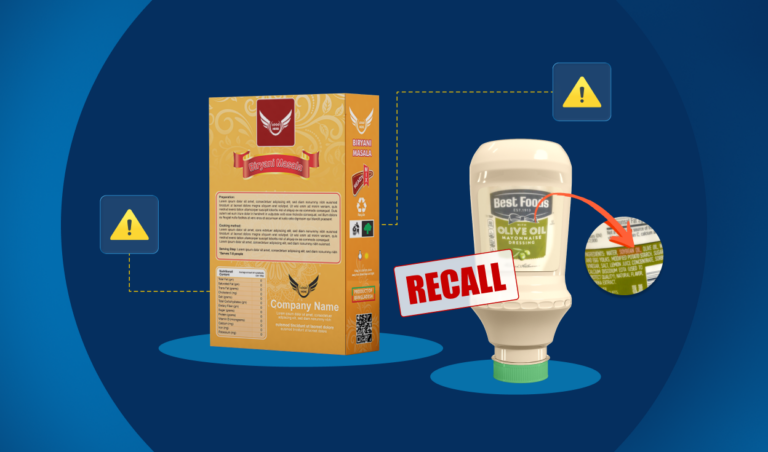
Data integrity failures rarely announce themselves. They show up as small, specific deviations: a prescribing information document where a dosage was updated in one file but not its translated counterpart. A batch record with a timestamp that doesn’t match the actual review date. A label revision that went out with the wrong strength because two versions were being edited in parallel.
Individually, each looks like a rounding error. To a regulator reviewing your audit trail, it’s evidence the process can’t be trusted — and that’s what triggers a warning letter, a delayed approval, or a recall.
What data integrity means for labeling and packaging
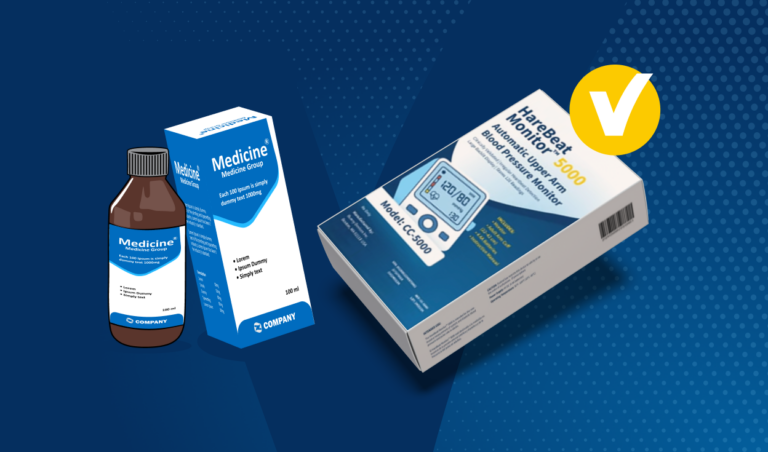
ALCOA+ isn’t optional for labeling and packaging — it’s core to staying inside FDA and EMA requirements for pharmaceutical proofreading, and it depends on solid SOPs being in place across your team.
TVT supports this directly. It compares documents in their original format, so nothing gets skewed, reformatted or dropped in conversion, and it generates proof that the compared text is complete, accurate and consistent — the exact evidence ALCOA+ asks for.
Manual proofreading puts data integrity at risk
Manual review leaves too much room for the kind of deviation that becomes a headline: a missed dosage change, a recall, a delayed approval. None of it is worth the risk in pharma.
Automated proofreading closes that gap. Every step gets documented as you go, so Regulatory Affairs teams can confirm labeling and packaging match what was actually approved — no guessing. That documentation becomes your audit trail, and it’s exactly what ALCOA+ compliance depends on.
Watching the automated detectives
Since so much data now lives in electronic systems, the industry needed a way to validate those systems too — that’s GAMP 5, the current edition of Good Automated Manufacturing Practice from ISPE. It takes a risk-based approach to proving an automated system does what it’s supposed to.
TVT’s Validation Package is built on GAMP 5, giving you a ready-made report for qualification. Schlafender Hase is also ISO 9001:2015 certified for designing and developing software for regulated environments — so the tool proofreaders rely on is itself held to the same standard.

Furthermore, it allows proofreaders to immediately recognize any differences from the original during document comparison. Integrated company specific libraries (e.g. MS Word libraries licensed from Microsoft) for the compared documents increase the accuracy and efficiency of proofreading.
Data integrity is absolutely crucial for pharma and medical device companies. Regulatory authorities demand it and companies must comply with it. Achieving Data Integrity involves many different activities and processes beyond good proofreading practices. TVT, the Text Verification Tool, makes a valuable contribution to Data Integrity processes, providing results that simply cannot be achieved through manual proofreading.
Data integrity isn’t a one-time fix — it’s a habit your whole review process needs to support. Book your demo to see how TVT builds that proof into every comparison, automatically.
What is data integrity in pharma?

It’s the set of principles — ALCOA+ — that prove your data is accurate, complete and traceable across its entire lifecycle, from first entry to final submission.
What's the difference between ALCOA and ALCOA+?
ALCOA covers the original five principles: Attributable, Legible, Contemporaneous, Original and Accurate. ALCOA+ adds four more: Complete, Consistent, Enduring and Available.
Is data integrity the same as data quality?
Not quite. Data quality asks whether the data is correct. Data integrity asks whether you can prove it’s correct — and trace every change back to who made it and when.
How does TVT support data integrity?
TVT compares documents in their original format and generates a full audit trail of every review, giving Regulatory Affairs teams the documentation ALCOA+ and GAMP 5 both require.