Crop science labeling workflow: step-by-step guide for global compliance


Table of contents

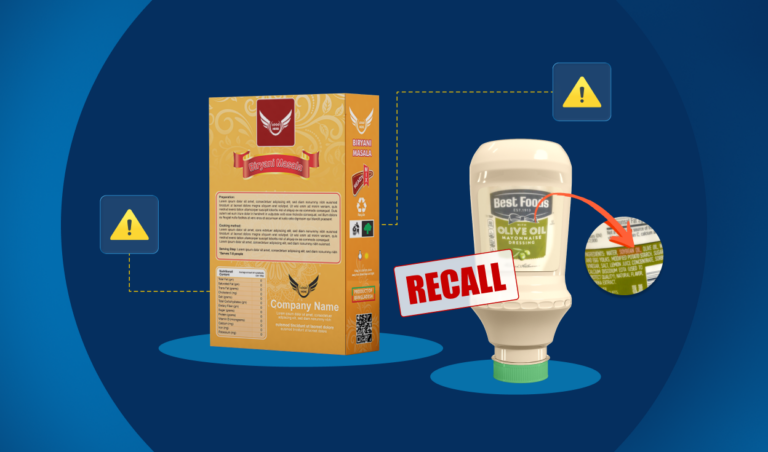
Agrochemical labeling is one of the most demanding content challenges in any regulated industry. A single product can require dozens of label variants across markets, each shaped by a different regulatory body, language, and safety standard. Errors don’t just slow teams down, they trigger recalls, delay registrations, and put companies at risk of non-compliance.
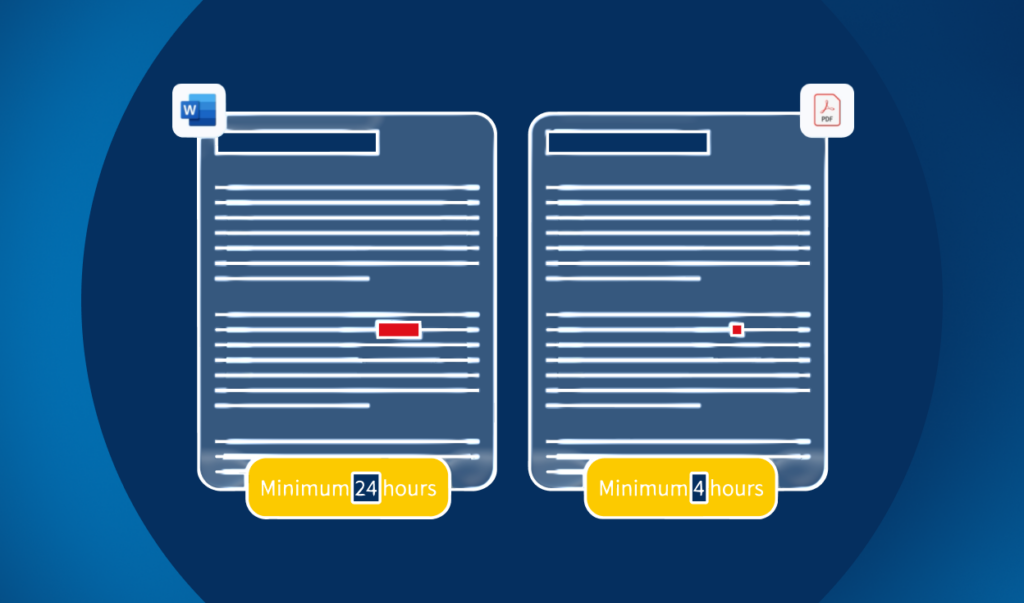
Most crop science teams are managing this complexity with fragmented, manual workflows: reviewing documents side by side, chasing version histories across email threads, and relying on visual checks to catch discrepancies before print. The margin for error is slim, but the process leaves a wide gap.
To manage this complexity effectively, leading crop science companies are moving toward structured, end-to-end labeling workflows, built around clear process stages, defined ownership, and automated verification at every step.
What is a crop science labeling workflow?
A crop science labeling workflow is a structured process for creating, reviewing, approving, and maintaining agrochemical product labels from initial regulatory submission through to printing, distribution, and lifecycle updates.
It covers more than just the physical label. The workflow spans regulatory documents, artwork files, digital content, and marketing materials, all of which need to align with approved label claims across every market a product enters. Stakeholders typically include regulatory affairs, packaging, marketing, and quality assurance teams, each playing a distinct role in moving content through review and approval.
For a deeper look at what compliance means across different regulatory systems
Why crop science labeling workflows break down
Even experienced teams struggle to keep labeling workflows running cleanly. The challenges are structural, built into the nature of global, multi-market product launches, and they compound when teams are working without a clearly defined process.
Multiple regulatory frameworks
Crop science products sold globally must comply with requirements from the EPA in the US, EFSA and individual member state bodies in Europe, and a wide range of national authorities elsewhere. Each framework has its own rules for what content must appear on a label, in what format, and in what language. Staying current as those requirements shift is a challenge in itself. For more on this, see our article on regulatory changes in the agrochemical industry.
Label variations across markets
A single active ingredient might support dozens of registered products across different regions, each with its own approved claims, use instructions, and precautionary language. Managing version consistency across all of those variants — and ensuring that changes made in one market don’t silently conflict with another, is one of the most common sources of labeling error.
Manual document comparison
Teams reviewing label content against master documents, regulatory submissions, or previous versions often rely on side-by-side visual checks. At scale, this approach is slow and unreliable. Small discrepancies — a changed dosage figure, a missing signal word, a transposed digit in a registration number, are easy to miss. Our guide to document comparison software for regulatory affairs explores how this gap gets closed.
Version control issues
Without a centralized system for managing label content, teams frequently work from different file versions. When a regulatory update triggers a label change, ensuring that the update flows through every downstream document — artworks, SDS, digital content — requires deliberate process discipline that manual workflows rarely maintain.
Supplier and printer errors
Even when internal review is thorough, the transition to pre-press introduces new risks. Artwork files pass through external suppliers and printers who may introduce discrepancies during file conversion, typesetting, or plate production. These errors are difficult to catch with visual inspection alone and often only surface after print.
Crop science labeling workflow: step by step
A well-designed labeling workflow moves content through five core stages, each with defined inputs, review checkpoints, and handoff criteria. Here’s how each stage works — and where the risk lies.
1 – Product development and regulatory submission
The workflow begins before a label is written. At the regulatory submission stage, teams are defining what a product is approved to claim — the active ingredients, application rates, target pests, precautionary statements, and signal words that will govern every label variant that follows.
The key input is the regulatory dossier and jurisdiction-specific requirements. The risk at this stage is fragmentation: teams working on submissions for different markets without a shared framework for tracking regulatory-driven label changes by region or country. Inconsistencies introduced here compound through every downstream stage.
Standardizing submission templates and building an annotation trail from the outset gives teams a foundation for accurate content development — and audit-ready documentation when it’s needed.
TVT supports this stage with template creation tools, annotation comparison, and automated audit trail reporting — giving regulatory teams a consistent, traceable foundation to build from.
2 -Labeling development and content creation
With regulatory approval in place, content teams develop the actual label text — often simultaneously across multiple markets and languages. This is the stage where complexity multiplies fastest.
Multi-market label creation requires verifying that each variant correctly reflects the approved claims for that jurisdiction, in the correct language, in the correct reading order. Translation and localization add another layer of risk: a technically accurate translation can still introduce ambiguity in hazard communication, or fail to meet a market’s specific formatting requirements.
Manual cross-checking between the master document and each label variant is time-intensive and prone to error. Teams need a reliable way to verify content at scale — across all variants, including tables, measurement units, and specialist agrochemical terminology — without slowing down the review cycle. See how EPA label review preparation fits into this stage.
TVT supports this stage with many-to-one comparison (verifying multiple variants against a single master), spelling and punctuation checks across multilingual content, and table verification to catch formatting discrepancies.
3 – Marketing and customer-facing materials
Approved label content doesn’t stay on the label. Claims, application instructions, and safety information flow into marketing brochures, distributor materials, technical data sheets, and online product pages. Each of these touchpoints needs to accurately reflect what’s on the approved label — a requirement that’s easy to state and surprisingly difficult to maintain at scale.
When labels are updated — whether due to a regulatory change, a new use pattern, or a safety revision — those changes need to propagate reliably across all downstream marketing content. Without a systematic verification process, outdated or inconsistent claims persist in customer-facing materials long after the label itself has been corrected.
TVT supports this stage with web page import for direct digital content verification, flexible field mapping to handle varied content formats, and configurable exclusions for content that doesn’t require comparison.
4 – Pre-press and printing
Pre-press is the last stage before a label becomes physical — and one of the highest-risk stages in the entire workflow. Artwork files move to external suppliers and printers, and with that handoff comes the opportunity for “final version drift”: small discrepancies introduced during file conversion, color separation, or typesetting that don’t match the approved artwork.
Visual inspection of printer’s proofs is unreliable at this stage. The volume of content and the subtlety of typical errors — a slightly different shade on a hazard pictogram, a transposed character in a batch number field, a text reflow that changes line breaks — make manual review insufficient for supplier accountability.
TVT supports this stage with image comparison to detect visual discrepancies in artwork files, version comparison to verify final proofs against approved originals, and automated annotation of every difference found — creating a documented record for supplier review.
5 – Ongoing updates and lifecycle management
A label is never truly finished. Regulatory bodies issue updated requirements. New scientific evidence triggers safety language revisions. Products are registered for new use patterns, or withdrawn from specific markets. Formulations change. Signal words are reclassified.
Every one of these events initiates a new pass through the workflow — reviewing which variants are affected, updating content, re-verifying downstream materials, and ensuring that the change is properly documented. Managing this on an ongoing basis, across a product portfolio with dozens of active registrations, is where manual workflows are most likely to fail.
Building lifecycle management into the workflow from the start — with systematic change tracking, impact assessment, and version-controlled documentation — is what separates teams that handle regulatory updates smoothly from those that scramble.
How to prepare product labeling for an EPA label review
Preparing for an EPA label review requires more than just checking content — it demands accuracy across every version and format. Learn how to streamline your process and avoid costly delays in this step-by-step guide.
Manual vs. automated crop science labeling workflows
| Stage | Manual Workflow | Automated Workflow (TVT) |
|---|---|---|
| Regulatory submission | Manual cross-checking between documents; inconsistent templates across markets | Automated comparison against a master source; standardized templates with annotation tracking |
| Labeling development | Fragmented reviews across variants; high risk of missed discrepancies in translations | Centralized many-to-one verification; multilingual spelling, formatting, and table checks |
| Marketing materials | No systematic process for propagating label updates to downstream content | Automated validation of web pages and marketing materials against approved label content |
| Pre-press and printing | Visual inspection of proofs; errors in supplier files frequently go undetected | Full artwork and text verification; automated annotations for every discrepancy |
| Lifecycle management | Reactive updates; changes tracked manually with high risk of incomplete propagation | Version-controlled, audit-ready documentation with systematic change impact tracking |
Where automated verification fits in the workflow
Automated verification isn’t a replacement for regulatory expertise or human judgment. It’s a control layer, the mechanism that ensures content accuracy and consistency at every stage of the workflow, at a speed and scale that manual review can’t match.
For crop science teams, the value of automated verification shows up across the entire labeling lifecycle: comparing regulatory submissions against master content, verifying label variants against approved originals, checking that marketing materials accurately reflect current label claims, and confirming that printer’s proofs match the artwork file before plates are made.
At each stage, the key capabilities are the same: the ability to compare any document format, detect text and image differences reliably, flag discrepancies with clear annotations, and generate a documented audit trail. This is what TVT’s verification workflow is built to deliver and what our crop science solution is specifically designed for.
Where multilingual verification is involved, as it almost always is in global crop science labeling, the ability to check content in specialized agrochemical terminology, across multiple languages simultaneously, without false positives from technical vocabulary, is a particular differentiator.
How to improve your crop science labeling workflow
Whether you’re building a new workflow from scratch or looking to reduce errors and delays in an existing process, the improvements that have the most impact tend to follow a common pattern:
- Standardize submission templates. Consistent formats across markets reduce the time spent reconciling differences and make it easier to track regulatory-driven changes by region.
- Centralize label content. A single source of truth for approved content, accessible to all teams involved in the workflow, prevents version divergence and makes updates easier to manage.
- Reduce manual document comparison. Side-by-side visual review is the weakest link in most labeling workflows. Replacing it with automated comparison removes a significant source of error and frees up reviewer time for higher-value tasks.
- Implement automated verification at each stage. Verification shouldn’t only happen at the end of the workflow. Building automated checks into regulatory submission, labeling development, marketing, and pre-press stages catches errors early, when they’re cheapest to fix.
- Build audit-ready documentation from the start. Regulators and auditors need to see evidence that your content was verified. Maintaining automated annotation records and version histories throughout the workflow makes audit preparation straightforward rather than stressful.

Simplify your crop science labeling workflow
Managing global labeling workflows doesn’t have to mean more complexity. Download the Crop Science Labeling Buyer’s Guide to learn how leading teams are reducing errors, accelerating regulatory approvals, and building scalable, audit-ready workflows.
- Reduce labeling errors across markets
- Accelerate regulatory approvals
- Build scalable, audit-ready workflows
What is a crop science labeling workflow?

A crop science labeling workflow is a structured process for creating, reviewing, and approving agrochemical product labels — from initial regulatory submission through to printing and ongoing lifecycle updates. It covers label text, artwork, regulatory documentation, and digital content across all markets where a product is registered.
What are the biggest risks in labeling workflows?
The most common risks are manual errors in document comparison, inconsistent content updates across label variants, version control failures when regulatory changes occur, and discrepancies introduced during pre-press and printing. Each of these can lead to compliance failures, recalls, or delayed registrations.
How do companies manage multi-market labeling?
Leading crop science companies manage multi-market labeling through a combination of centralized content management, standardized submission templates, and automated verification tools that can compare label variants against a master document at scale — across languages and formats.
How can labeling workflows be automated?
Labeling workflows can be automated using software that compares documents, verifies artwork files, tracks version changes, and generates annotated audit reports. Automated verification tools like TVT integrate across the full labeling lifecycle — from regulatory submission through pre-press — replacing manual review at each stage with a systematic, documented process.