Understanding EU cosmetic regulation (EC 1223/2009): a guide to safety, labeling & CPSR


Table of contents
- What is EC 1223/2009?
- Scope: which products fall under EC 1223/2009?
- Pre-market safety: from CPSR to CPNP notification
- The responsible person: legal duties & pitfalls
- Animal testing ban & alternative methods
- Market surveillance & enforcement
- 2025 Omnibus draft: what could change?
- Resources & next steps
- Related reading: automating your artwork review process
- References


The EU Cosmetic Regulation (EC) No 1223/2009 sets strict requirements for product safety, labeling, and market approval across all cosmetic products sold in the European Union.
For manufacturers and brand owners, compliance is not just about meeting legal requirements; it is essential to avoid recalls, protect consumers, and ensure products can be sold across multiple markets.
This guide explains the key requirements of EU cosmetic regulation, what must appear on product labels, and how companies can ensure compliance through structured processes and verification.
What is EC 1223/2009?
Each new product development within cosmetics, from the fitness check to the microplastic restrictions reshapes the path to market. This means the brand or category team needs to remain vigilant when it comes to integrating compliance and brand integrity from concept to launch phase. Ultimately, transparency regarding sustainable materials, allergen claims, accurate claims, digital labelling on the packaging and accurately reflected in ecommerce channels will foster consumer trust. The EU Cosmetic Regulation (EC) No 1223/2009 is the primary regulatory framework for the marketing of finished cosmetics products. It was introduced in 2009 and came into force fully in 2013, replacing the former Cosmetics Directive (76/768/EC).
The purpose of EU Cosmetic Regulation (EC) No 1223/2009 is to ensure that all cosmetic products sold in the European Union are safe for human use, while also providing consistent rules across all EU member states for cosmetics on aspects such as animal testing and promotion. The regulation is also designed to foster fair competition and innovation in the cosmetics industry. And it ensures that product claims are honest, labels are clear, and that consumers are well-informed about the cosmetics they’re using, how to use the cosmetics, and potentially harmful ingredients.
What is the EU Cosmetic Regulation?
The EU Cosmetic Regulation (EC No 1223/2009) is the main legal framework governing cosmetic products in the European Union. It defines requirements for product safety, labeling, ingredients, and market authorization to ensure consumer protection and regulatory compliance.
Scope: which products fall under EC 1223/2009?
The regulation defines a cosmetic product as any substance or mixture applied to external body parts, including skin, nails, lips, hair, or the oral cavity, with the intent to:
- Cleanse
- Perfume
- Change appearance
- Protect
- Maintain condition
- Correct body odours
The regulation distinguishes between a “substance” (a single chemical element or compound) and a “mixture” (a combination of substances), and it explicitly excludes products intended to be ingested, inhaled, injected, or implanted.
It defines key responsibilities within the supply chain, such as the “Responsible Person,” and sets clear pre-market requirements including safety assessments, product labelling, and notification. In terms of safety, it addresses both undesirable effects and serious undesirable effects, and outlines the obligations for reporting, recall, and market withdrawal of unsafe products.
The regulation covers a wide range of cosmetic products, from head to toe – hair dyes to nail polish. [1]
Pre-market safety: from CPSR to CPNP notification
Before a cosmetic product can be sold in the EU, it must undergo a safety assessment performed by a qualified safety assessor with a university degree in pharmacy, toxicology, medicine, or a related discipline, recognized within the EU. This assessment evaluates the product’s intended use, the exposure to its ingredients, and all available toxicological and safety data, resulting in a Cosmetic Product Safety Report (CPSR), compiled in accordance with Annex I of the Regulation. The report has a Part A with product safety data, and a Part B that evaluates the safety. [2]
The CPSR is part of the Product Information File (PIF), which must also include a product description, evidence of claimed effects (if applicable), a description of the manufacturing method demonstrating Good Manufacturing Practice (GMP) compliance, and details of any animal testing conducted. The PIF must be kept readily accessible at the address of the Responsible Person for 10 years after the last batch of product is placed on the market and made available to competent authorities upon request. In addition, the Responsible Person must notify the European Commission through the Cosmetic Products Notification Portal (CPNP) before the product is placed on the market. The notification includes information such as the product’s name, category, ingredient composition (including nanomaterials and CMR substances, if relevant), and the name and address of the Responsible Person. [3] The overall aim is to ensure product traceability, regulatory oversight, and consumer safety in the EU cosmetics market.
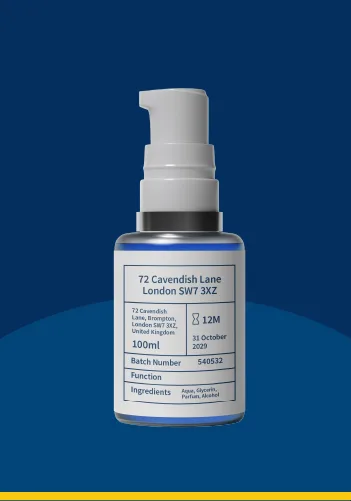
According to EU Regulation (EC) No 1223/2009, cosmetic products placed on the market must carry mandatory labeling information on their container and packaging in indelible, easily legible, and visible lettering. Labeling requirements are dealt with in Chapter VI, in Articles 19, 20 and 21. This includes: [4]
- The name and address of the responsible person, with the address where the Product Information File (PIF) is readily available highlighted if multiple addresses are given. Imported products must specify the country of origin.
- The nominal content by weight or volume, except for packaging under 5 grams or 5 millilitres, free samples, or single-application packs.
- The date of minimum durability (if the product lasts less than 30 months), preceded by the symbol shown in point 3 of Annex VII (commonly referred to as the “best before end” or “hourglass” symbol). For products with a minimum durability exceeding 30 months, the date of minimum durability is not required; instead, the period after opening (PAO) symbol (an open jar with a number indicating months or years) must be shown to indicate how long the product remains safe after opening (unless a single use product).
- Any specific precautions for use as listed in Annexes III to VI, including special information for professional-use products.
- The batch number or reference for identifying the product.
- The function of the product, unless clearly apparent from its presentation.
- A full list of ingredients, preceded by the word “ingredients,” using standardized common names as per the glossary in Article 33. Ingredients are listed in descending order of weight at the time of addition, with those under 1% allowed in any order after the main ingredients. Nanomaterials must be clearly indicated with the word “nano” in brackets.
Furthermore, if it is impractical to place some of this information directly on the packaging (especially for points related to precautions and ingredient listing), it can be included on an enclosed leaflet, label, tape, tag, or card, with an appropriate symbol referring to this additional information on the packaging.
The language of the labeling information (such as nominal content, date, precautions, and product function) is determined by the member state itself.
These requirements, including the use of standardized symbols, help ensure transparency, consumer safety, and easy access to essential product information throughout the EU cosmetics market.
The responsible person: legal duties & pitfalls
Animal testing ban & alternative methods
Market surveillance & enforcement
Member states are responsible for market surveillance to ensure cosmetic products comply with EU regulations. Regulatory authorities in the various member states perform regular checks on products, including physical and lab tests, and review manufacturers’ product information files. These checks help confirm products are safe and correctly labelled.
If a serious problem or risk is found, the responsible person and distributors must report it immediately to the national regulatory body. Authorities can then take quick action, such as ordering product recalls or withdrawals to protect consumer health.
When a cosmetic product does not meet the legal requirements, national regulatory authorities have the power to demand corrective measures from the responsible person, including fixing safety issues or recalling the product within a specific deadline. Generally, the responsible person has the opportunity to respond and provide their opinion before action is taken. In urgent cases, though, the national authority might demand immediate action.
2025 Omnibus draft: what could change?
While numerous amendments have been made to Regulation EC 1223/2009 since introduction, most have been updates to annexes (see the list of “Amendments to Cosmetics Regulation”. The main provisions have largely remained unchanged. By and large, amendments to date have been to account for the use of new substances or to revise use of existing banned or restricted substances.
However, in early 2025 the European Commission announced a full evaluation of the CPR from mid-2025 to mid-2026 in order to assess its current relevance and effectiveness in the market. Key issues include the regulation’s ability to protect human health, support green innovation, adapt to digital trends, align with other EU laws, and remain cost-effective for businesses. The Call for Evidence and Public Consultation phases are closed. [6]
Furthermore, the EU is pushing ahead vigorously with the goal of aligning cosmetics regulation with the broader regulation of chemicals. Chemicals are covered by regulations such as Classification, Labeling, Packaging (CLP) and REACH. According to one series of tests, around “6% of inspected cosmetic products contained hazardous substances banned under persistent organic pollutants (POPs) and REACH regulations.” [7, 8, 9]
In July 2025 the European Commission released draft legislation on proposed changes to the body text of the legislation. It is commonly referred to as the “Omnibus” legislation. The EU’s draft update to the Cosmetics Regulation – the first major revision since 2013 – introduces several significant changes. Key changes include faster approval processes for new ingredients (adding a new Article 14a), clearer rules for derogation procedures for substances of concern (carcinogenic, mutagenic, toxic to reproduction; CMRs), the removal of complex and redundant nanomaterial pre-notifications, and the elimination of duplicate reporting requirements. Importantly, the glossary of cosmetic ingredients will be digitized to improve labelling accuracy and transparency. While some changes will take effect immediately once adopted, others will be phased in, and the proposal remains open to public consultation until October 14, 2025. These changes apply only within the EU and do not automatically affect the UK market post-Brexit. [10]
How to ensure EU cosmetic labeling compliance (step-by-step)
Ensuring compliance with EU cosmetic regulation requires a structured process that connects formulation data, regulatory requirements, and packaging execution.
Step 1: Compile product formulation and ingredient data
Gather complete formulation details, including all raw materials, concentrations, and supplier information.
Step 2: Conduct safety assessment (CPSR)
Perform a Cosmetic Product Safety Report to evaluate ingredient safety, exposure, and potential risks.
Step 3: Prepare the Product Information File (PIF)
Document all required product data, including safety assessments, formulation details, and manufacturing processes.
Step 4: Assign a Responsible Person (RP)
Designate a Responsible Person within the EU who ensures the product complies with all regulatory requirements.
Step 5: Create compliant label content
Develop label content including INCI ingredient lists, warnings, product function, and required claims.
Step 6: Design packaging and artwork
Transfer approved content into packaging designs, ensuring layout, readability, and formatting meet regulatory standards.
Step 7: Adapt labels for each EU market and language
Translate and localize label content while maintaining consistency with approved regulatory information.
Step 8: Verify label and artwork accuracy
Compare final artwork against approved source content to ensure no discrepancies in ingredients, warnings, or claims.
Step 9: Approve and document with audit trail
Complete formal approval processes with documented reviews, version control, and traceability.
Step 10: Maintain and update labeling as regulations evolve
Continuously monitor regulatory updates and ensure labeling remains compliant across all markets.
Resources & next steps
Compliance with EC 1223/2009 is crucial to maintaining market access for your product and the safety of consumers. some of the key resources to use to stay informed are:
- The EU website should be your first port of call for any regulatory proposals or amendments: Single market economy
- The European Chemicals Agency has responsibilities that impact cosmetics, especially in regard to REACH and industry news: echa.europa.eu
- The World Trade Organization portal provides updates within and beyond the EU, and is a crucial resource for international trends and changes: World Trade Organization
- There are very many organizations providing professional services on cosmetics compliance. Our advice is to create a databank of companies that are regularly publishing on the topic or perhaps engaging their services to help you manage your compliance.
Related reading: automating your artwork review process
Compliant labeling is about more than just ticking regulatory boxes; it’s also about ensuring accuracy at every stage of content and artwork creation. Manual proofreading and artwork review processes can be time-consuming, error-prone, and difficult to scale across teams.
True compliance and efficiency require collaboration across multiple functions — from regulatory teams interpreting EU requirements, to REACH specialists ensuring chemical safety compliance, to brand teams protecting design integrity, and QA/packaging teams verifying final print accuracy. When these groups work in silos, the risk of misalignment grows; when they’re connected through streamlined, automated processes, that risk shrinks dramatically.
If you’re managing product launches, label updates, or translations, automation can help reduce risk and save time.
Learn how automation tools like TVT detect deviations others miss. and help you meet labeling standards faster, without sacrificing quality.
What is required to sell cosmetics in the EU?

Products must comply with Regulation (EC) No 1223/2009, including safety assessment, labeling, and CPNP notification.
What must appear on a cosmetic label in the EU?
Labels must include ingredients (INCI), warnings, responsible person details, batch number, and product function.
Who is responsible for compliance?
The Responsible Person (RP) ensures the product meets all regulatory requirements.
What are the risks of non-compliance?
Non-compliance can lead to product recalls, fines, and market withdrawal.
How often do cosmetic regulations change?
Regulations are updated regularly, especially around allergens, ingredients, and sustainability requirements.
References
1. https://eur-lex.europa.eu/legal-content/EN/TXT/?uri=CELEX:02009R1223-20190813
2. https://www.intertek.com/assuris/cosmetics/safety/cpsr
3. https://www.ecosistant.eu/en/the-responsible-person-role-under-the-cosmetics-regulation-1223-2009/
4. https://eur-lex.europa.eu/legal-content/EN/TXT/?uri=CELEX%3A32009R1223&qid=1753781387945
5. https://www.hpra.ie/regulation/cosmetics/obligations-of-responsible-persons/cosmetic-product-notification-portal-(cpnp)
6. https://ec.europa.eu/info/law/better-regulation/have-your-say/initiatives/14433-Cosmetic-Products-Regulation-evaluation_en
7. https://echa.europa.eu/et/-/hazardous-chemicals-found-in-cosmetic-products
8. https://environment.ec.europa.eu/strategy/chemicals-strategy_en
9. https://www.kft.de/en/news/revision-of-the-cosmetics-regulation-what-the-eu-commission-is-now-planning
10. https://cosmeservice.com/news/regulatory-update-eu-proposes-changes-to-cosmetics-regulation-ec-no-1223-2009