Why automated proofreading matters in biotech scale-ups


Table of contents

Biotech scale-ups move fast, but documentation risk grows even faster. As teams prepare IND, BLA, NDA, clinical labeling updates, launch materials, IFUs, cartons, and partner-facing documents, manual review becomes a bottleneck. A single missed change can delay submissions, trigger rework, or create compliance risk. The goal is not just proofreading faster. It is scaling document control safely.
Why documentation risk increases as biotech companies scale
As biotech companies grow, so does the volume and complexity of regulated content.
You’re managing:
- Multiple products and indications
- Frequent updates across clinical and commercial materials
- Expanding global markets and languages
- Cross-functional teams (Regulatory, QA, Medical, Artwork, Marketing)
- Multiple formats (Word, PDF, XML, artwork files)
With more stakeholders and more versions, the risk of inconsistencies increases significantly.
Labeling and submission errors can stall your next big milestone
When people hear the word “proofreading,” they often think of catching typos in a college paper. But in biotech, proofreading means something very different and far more consequential.
In a fast-scaling biotech environment, you’re managing regulatory documents, clinical content, labeling, instructions for use, artwork, and important safety information. These aren’t just words on a page, they’re the backbone of your product’s journey to patients, regulators, and partners. And every version must be accurate, consistent, and audit ready.
So why are so many biotech companies still relying on manual proofreading to get it all done?
The risk of manual review in biotech
Whether you’re prepping for an NDA or BLA submission, scaling production, or entering clinical trials, every piece of documentation is under the microscope, sometimes literally.
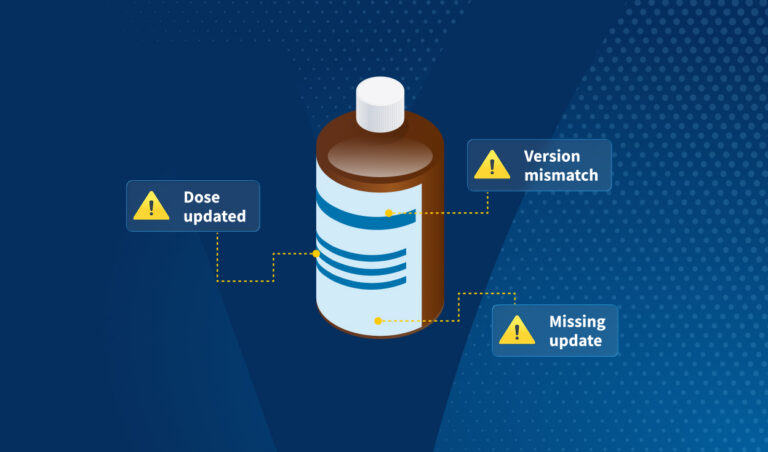
A single error in a dosage, barcode, or label layout can trigger a Corrective and Preventive Action (CAPA), delay product release, or even compromise patient safety.
Some examples of costly, but easy-to-miss errors:
- A single-digit dosage typo (e.g., 1 mg instead of 10 mg)
- A duplicated instruction (e.g., “Do not not inject”)
- Unapproved formatting changes that violate regulatory guidelines
At early stages, a few team members may be able to manually review content line by line. But as your biotech scales, this approach simply doesn’t hold up.
Why biotech teams are automating proofreading
Top Life Science companies have long used automated document comparison tools to catch inconsistencies across regulatory, labeling, and marketing content. Now, biotech companies, especially those moving quickly toward commercial stages, are following suit.
With document comparison software like TVT, you can:
- Instantly compare source documents across formats (e.g., Word to PDF)
- Flag all deviations: text, formatting, graphics, barcodes, and more
- Review and approve changes with full audit trail and version control
- Ensure compliance with FDA (21 CFR Part 11) and EU Annex 11
In just three steps, you can proofread and approve documentation:
1. Upload your files (source vs. target)
2. Review identified differences
3. Approve or comment with a validated audit trail
What automated proofreading actually does
Automated proofreading compares documents and artwork files to ensure consistency across all versions.
It allows teams to:
- Compare Word, PDF, XML, and artwork files automatically
- Detect changes in text, numbers, symbols, and formatting
- Identify missing or extra content
- Validate alignment between source content and final outputs
- Generate audit-ready reports of all changes
Importantly, it supports human reviewers – it doesn’t replace them.
Real results for biotech teams
By shifting to automated proofreading, biotech companies report:
- Faster review cycles (up to 80% time savings)
- Improved compliance with Health Authority expectations
- Reduced headcount pressure no need to grow the team just to scale RA & QA
- Lower risk of recalls, rework, or submission rejections
This means your scientists, regulatory managers, and quality teams can spend more time focused on high-impact work and less time buried in document markup.
“TVT has the potential to revolutionise how we work in regulatory affairs, dramatically reducing ‘dead’ proofreading time that can be spent on more value-adding activities. I wish I’d known about this proofreading solution years ago!”
Regulatory Affairs Manager
TevaWhy biotech teams automate before commercial scale
1. Reduce review time
Automated comparisons dramatically speed up proofreading cycles.
2. Scale without increasing headcount
Teams can handle more products, markets, and updates without adding reviewers.
3. Improve consistency across documents
Ensure alignment between regulatory text, artwork, and published materials.
4. Support inspection readiness
Maintain clear audit trails and documentation for regulatory authorities.
5. Reduce risk of delays and rework
Catch errors earlier in the process—before submission or production.
Every detail matters: proofreading in highly regulated industries
Discover why proofreading is critical in highly regulated industries—and how to prevent costly errors in labeling, packaging, and regulatory documents.
A better way to scale documentation in biotech
Automated proofreading isn’t just a nice-to-have. For growing biotech companies juggling tight timelines, limited resources, and increasing regulatory pressure, it’s a competitive advantage.
TVT is designed specifically for life sciences. It’s already used by all 20 of the top 20 pharma companies and increasingly, by ambitious biotech scale-ups preparing for commercial launch.
Ready to see what automated proofreading can do?
FAQs — Automated Proofreading for Biotech
What is automated proofreading in biotech?

Automated proofreading uses software to compare regulated documents and artwork files to detect inconsistencies, errors, and missing content.
Does automated proofreading replace human review?
No. It supports reviewers by identifying differences quickly, allowing them to focus on decision-making and compliance.
Can automated proofreading support regulatory submissions?
Yes. It helps ensure consistency across submission documents, reducing the risk of errors and delays.
What types of documents can be checked?
Common use cases include:
- Regulatory submissions (SmPC, PIL, IFU)
- Packaging and labeling artwork
- Clinical and safety documents
- Promotional and medical content
How does it help with compliance?
Automated proofreading provides traceability, consistency, and audit-ready documentation – key requirements in regulated environments.